
Maths revision feels overwhelming for many students. Grabbing concepts for each topic and chapter is different, but revising them all together is a whole different perspective. Revision is not just about memorising formulas but about understanding concepts, applying them correctly, and performing under exam pressure.
Unlike other O-level subjects, maths requires practice, and this can be tricky, yet stressful. The Maths formulas aren’t as easy to digest as the IGCSE Physics Formulas. Maths formulas need proper understanding and clarity of concepts of where to apply them.
VACE Global is here to provide you with stress relief. By following these Maths revision techniques, you will not only retain more but also boost your grades.
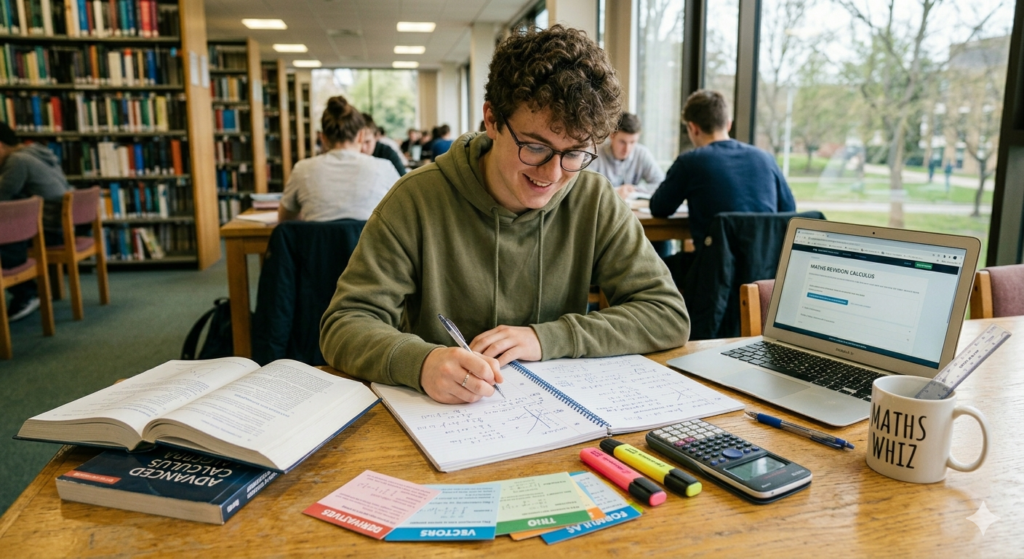
What to revise in Maths?
Maths requires revision of core concepts. Effective Maths revision starts with knowing what actually matters. Instead of trying to cover everything equally, focus on:
- Core concepts and fundamentals
- Frequently tested topics
- Weak areas that need improvement
- Past paper questions and exam patterns
Prioritising the right content ensures your revision is focused, not overwhelming.
How to revise for Maths?
Maths is not a subject you can revise passively. Reading notes isn’t enough—you need to actively engage with the material.
For effective Maths revision:
- Practise regularly instead of cramming
- Solve questions without looking at solutions first
- Review mistakes and understand where you went wrong
- Revisit difficult topics consistently
The key is practice with understanding, not repetition without clarity.
Proven maths revision techniques:
- Active Practice:
Solve a variety of questions daily → Regularly practising different types of questions helps you understand concepts better and improves problem-solving skills.
- Past Paper Mastery:
Practise under timed conditions → Solving past papers within a time limit builds exam confidence and helps you manage time effectively during real exams.
- Error Analysis:
Learn from mistakes instead of ignoring them → Reviewing your mistakes helps you identify weak areas and avoid repeating the same errors.
- Formula Application:
Focus on using formulas, not just memorising them → Understanding how and when to apply formulas makes it easier to solve questions accurately.
- Spaced Revision:
Revise topics over time instead of all at once → Revisiting topics regularly improves long-term memory and prevents last-minute cramming.
- Master your Calculator:
Who do these maths revision techniques cater to?
These strategies are designed for students at different academic levels:
A-level Maths Revision:
At A-Level, Maths requires deeper understanding and problem-solving skills.
Focus on:
- Complex problem practice
- Application-based questions
- Time management during exams
IGCSE Maths:
For IGCSE, clarity of concepts and consistent practice are key.
Focus on:
- Strengthening basics
- Practising topical past papers
- Building speed and accuracy
O-level Maths revision:
O-Level Maths requires strong fundamentals and exam familiarity.
Focus on:
- Core topics
- Regular past paper practice
- Avoiding common mistakes
How to revise maths in one day?
If you’re short on time, your Maths revision needs to be strategic:
- Start with key formulas and concepts
- Focus on high-weightage topics
- Solve a few past paper questions
- Review mistakes quickly
- Avoid learning new topics at the last minute
The goal is to revise smart, not overload your brain.
What is the Best Way to Revise Maths?
The best way to revise Maths is through active practice, past paper solving, and reviewing mistakes consistently. Instead of just reading notes, students should solve questions daily, focus on weak areas, and practise under timed conditions to improve performance.
Boost your Exam Grades with Expert Guidance:
Sometimes, despite your best efforts, you may still feel stuck. That’s where the right support makes a difference.
At VACE Global, students are guided to:
- Revise Maths with proven strategies
- Understand concepts clearly
- Practise effectively with structured plans
- Build confidence before exams
With expert mentorship and continuous support, Maths revision becomes more focused, less stressful, and far more effective. Because achieving better grades isn’t about doing more, it’s about doing it right.
Start your journey with VACE Global today, and turn your hard work into the grades you deserve.
FAQs:
- How to revise maths quickly?
Focus on key concepts, practise important questions, and review mistakes instead of trying to cover everything at once.
2. How many hours should I spend on maths revision daily?
2–4 focused hours are effective if combined with active practice and regular breaks.
3. Why is maths revision important for exams?
It helps strengthen concepts, improve problem-solving skills, and increase confidence before exams.
4. How can I improve weak areas in Maths?
Identify mistakes, practise similar questions, and revise those topics consistently.
5. Is practising past papers enough for maths revision?
Past papers are essential, but they should be combined with concept understanding and error analysis.