
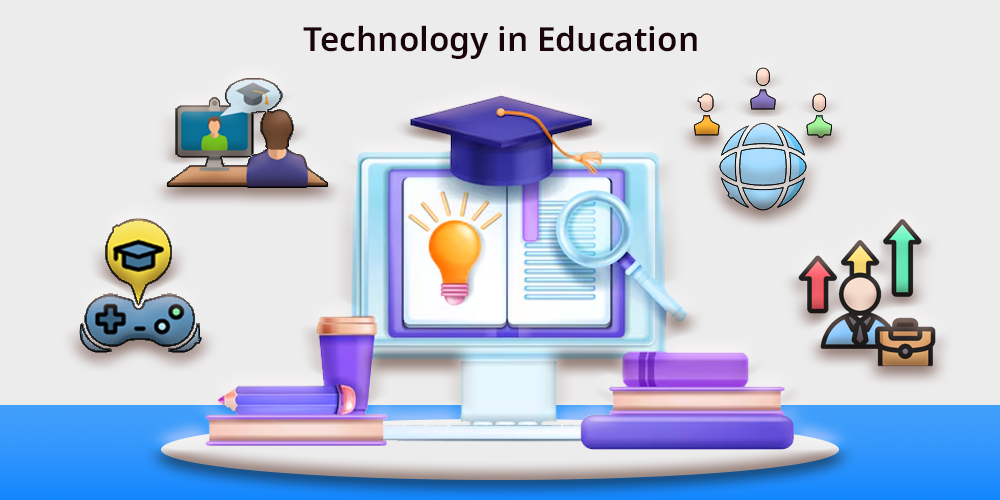
The field of education has evolved. Since the addition of Technology in Education, this industry has boomed, and the literacy rate has increased. Technology in education has played an integral part in enhancing the learning of students. With the boom of e-learning, technology in education has allowed students to use technical skills in Education.
In today’s era, digital devices have become a greater part of our lives and we cannot ignore the role of technology in education. Today, technology is changing classrooms and making education easily accessible to students all around the world. It has transformed the old, outdated concept of education in schools only. Students can now get an education from the comfort of their homes.
The top O-level schools in Karachi are using these advanced technologies for educating students. Whether you’re a student of Edexcel or Cambridge, A-level or FSc, or O-level and A-level, Technology in education has advanced the core of every qualification, from its teaching methods, testing methods, attendance, results, and feedback.
VACE Global is an online platform that incorporates the concept of technology in education, through providing easy access to O Level and A Level tuitions from the comfort of your homes.
What is technology in Education?
Technology in Education can be analysed by the use of technical elements, technical aspects, and digital tools to enhance the teaching and learning experience of both the teachers and the students.
It is the use of electronic devices and digital tools to facilitate students’ learning and enhance teachers’ teaching experience. The core electronic elements used in the education industry are computers, software, hardware, E-learning Platforms, and the internet. It is the opposite of traditional education.
Technology in education uses audiovisual elements that make learning more interesting and easier for students. This helps students easily learn difficult concepts, providing them with a personalised learning experience.
In modern education use of technology and AI has proved effective, by prominently enhancing the learning experience and learning outcomes of students. It has also helped in building digital classrooms, making idea sharing and interaction more fun and easy.
With the help of technology, teachers can conduct their classes through platforms like Zoom, Google Classroom, Google Meet, Microsoft Teams, etc.
Learning Management Systems (LMS) are also a very effective and useful product of Technology in Education. It has eliminated the need for physical schooling by keeping records of teachers, student, their attendance, lectures live and recorded, and whatnot.
What is the Importance of Technology in education?
Technology in education has conclusively made education more accessible and easier for students. It has made the sharing of study material and resources for the teachers easy and accessible for the students.
It has made communication easier, solving a lot of problems and issues of students through live classes instead of waiting till the next day to go to school and ask the teacher.
The concept of online classes and online learning has made education and learning fun for students, ultimately improving their performance of students.
13 Important Roles of Technology in Education:

- Accessibility: Technology removes geographical and physical barriers by making learning materials available anytime, anywhere. Students can access e-books, recorded lectures, online courses, and educational apps even in remote or underserved areas, ensuring everyone has the opportunity to learn.
- Flexibility: Digital learning platforms allow students to learn at their own pace and schedule. Whether it’s recorded lessons, online assessments, or self-paced modules, technology makes education adaptable to individual routines and learning styles.
- Personalised learning experience: AI-powered tools, learning management systems, and adaptive learning apps analyse student performance and tailor lessons accordingly. This ensures that each learner receives content that matches their strengths, weaknesses, and preferred learning style.
- Inclusive learning: Assistive technologies, such as screen readers, speech-to-text tools, captioned videos, and accessible interfaces, help students with disabilities learn without barriers. Technology ensures that diverse learning needs are met and no student is left behind.
- Cost Effectiveness: Digital resources reduce the need for expensive textbooks, physical materials, and commuting costs. Schools and students can rely on free or low-cost online resources, open educational content, and virtual classrooms to make education more affordable.
- Personalised Education: Technology allows teachers to design customised lesson plans, track individual progress, and provide targeted feedback. Students benefit from personalised quizzes, adaptive tasks, and learner-specific goals that support better academic outcomes
- Enhance collaboration: Online platforms, shared workspaces, and digital tools make group projects more interactive. Students can collaborate in real time using tools like Google Workspace, Microsoft Teams, or virtual whiteboards, regardless of their location.
- Career opportunities: Technology exposes students to digital skills needed for future careers, coding, data analysis, AI literacy, and digital communication. EdTech platforms also offer career guidance, skill-based courses, and certifications that improve employability.
- Enhanced communication: Digital communication tools—emails, messaging apps, LMS platforms, and parent-teacher portals—bridge the gap between students, teachers, and parents. This keeps everyone informed, improves feedback exchange, and strengthens academic support.
- Enhanced teaching methods: Interactive simulations, multimedia lessons, VR/AR tools, and smart classrooms allow teachers to adopt modern teaching strategies. Technology enriches lessons, increases student engagement, and makes complex concepts easier to understand.
- Helps students learn much better: Technology strengthens the overall learning experience by making concepts easier to understand through interactive videos, animations, simulations, and real-life examples. It supports different learning styles, visual, auditory, and energy, ensuring every student grasps lessons more effectively. With engaging digital content and instant access to information, students stay more motivated, retain knowledge longer, and perform better academically.
- Learning at one’s own pace: Technology allows students to pause, replay, and review lessons as many times as they need. Self-paced modules, recorded lectures, and interactive tutorials empower students to learn in a way that suits their speed, improving understanding and retention.
- Time-effective and easy: Digital tools simplify learning through quick access to resources, automated assessments, and streamlined note-taking. Students save time by accessing information instantly and completing tasks efficiently, making the entire learning process smoother and more organized.
How does technology in education work?
Technology in Education is the process of combining electronic media into learning, such as the internet, mobile phones, laptops, digital tools, computers, and other gadgets.
It’s not just about gadgets and tools, but also online platforms, learning management systems, network software, and platforms that allow the conduct of education through technology.
Below are the ways through which technology in education works:
- E-learning: E-learning platforms play a crucial role in technical education by making lessons more engaging and effective. They allow instructors to deliver content through live sessions or recorded lectures, giving students flexible access to learning materials. Popular tools like Zoom, Google Classroom, Google Meet, and Microsoft Teams support this digital learning process.
- Online assessments: Digital advancement enables online tests, quizzes, MCQs, and performance evaluations.
- Digital textbooks: Digital textbooks are electronic versions of traditional books that students can access on tablets, mobile phones, and computers using the internet. They often include multimedia features—such as videos, animations, interactive messages, and simulations- that make learning more engaging and easier to understand.
- Promotes an effective education system: Technology in education helps create an inclusive and supportive learning environment. When integrated effectively with traditional teaching methods, it contributes to the overall development and growth of students. Advanced digital tools make learning more fun, interactive, accessible, and engaging. Students gain the flexibility to learn at their own pace without sacrificing quality. Ultimately, educational technologies are designed to strengthen students’ knowledge, skills, and confidence.
- Better access to real-world information: Technology has eliminated traditional classroom barriers by bringing real-world learning directly to students through digital classrooms, online platforms, virtual libraries, advanced labs, and open educational resources. Virtual learning also connects learners with experts worldwide, expanding access to knowledge. These modern tools bridge the gap between theory and practice, making education more engaging and meaningful while encouraging critical thinking through exposure to diverse perspectives.
- Enhanced accessibility: One of the biggest advantages of educational technology is its ability to make learning inclusive and accessible for all. With online courses, digital resources, and assistive tools, students from diverse backgrounds can receive equal learning opportunities. Technology also empowers students with disabilities through specialized software, while remote learners can access high-quality education without geographical limitations.
- Better communication and collaboration: Technology strengthens communication and collaboration among students, teachers, and parents, creating a more connected learning environment. Tools like learning management systems and educational apps offer real-time feedback, project collaboration, and open discussion spaces where students can freely share ideas.
- Ensures student success in the modern workforce: Technology in education aims to prepare students for the modern workforce. The evolving work market demands a technological skill set, so it’s good to stay ahead.
- Better understanding: Advanced visual and audio tools greatly improve students’ comprehension and retention. Technology allows educators to use graphics, animations, interactive simulations, and AR applications to simplify complex concepts. Interactive whiteboards and educational videos engage different learning styles, spark curiosity, and make lessons more enjoyable and effective.
- Development of future reading skills: Educational technology not only supports academics but also equips students with essential future-ready skills such as creativity, critical thinking, and problem-solving. Through interactive and collaborative digital tools, learners analyze information more deeply and develop innovative solutions. These strengthened analytical abilities help students navigate modern challenges with confidence, preparing them for the demands of an evolving world.
Challenges of technology in the educational sector and their solution:
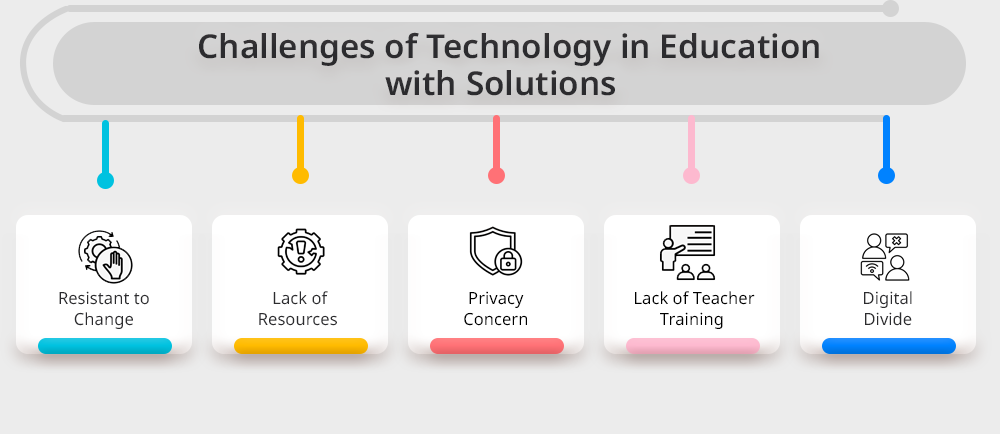
- Resistance to change: As soon as technology updates, there is a strong resistance to change from the people. People accept and trust the traditional method instead of switching to technology. This issue can be addressed by making learning more interactive and integrating modern technologies into the classroom. Engaging teachers and students in regular tech-based activities helps overcome the challenge effectively.
- Lack of resources: Not every institute is well-equipped, and the lack of resources makes it difficult to implement technology in education. This makes students unable to get information and technological skills. Although this is a common issue, it can be resolved if the government provides adequate funding and distributes resources based on actual needs. Proper allocation can significantly reduce the problem of resource shortages
- Privacy concerns: Privacy issues are one of the major challenges in the implementation of technology in education. Technology is always at risk of cybercrime and cyber attack. Due to privacy concerns, many students do not take part in online learning, which hampers the learning and teaching process.
- Lack of teacher training: Most teachers lack the technological skill set and they are unable to adapt to the technological changes in the education industry. This issue can be addressed by offering teachers updated training modules and skill-building courses. These programs help educators strengthen their expertise, enabling them to teach students more effectively with up-to-date knowledge and skills.
- Digital divide: The digital divide prevents many people from accessing essential technologies like the internet, computers, and mobile devices, creating a significant gap between individuals and digital opportunities. This divide arises from factors such as limited digital literacy, economic constraints, and certain government policies, all of which hinder equal use of technology. This issue can be reduced by making technology widely accessible, improving digital literacy, expanding connectivity, and integrating digital tools across all communities. These steps help bridge the digital divide and ensure equal opportunities for everyone.
Impact of technology in the educational sector:
- Student achievement: Schools that use technology have reported an increase in students’ achievement scores, especially in subjects like science that use visual aids to learn complex concepts and diagrams. Also, mathematics scores have seen improvement.
- Engagement: Classrooms that incorporate technology have seen drastic improvements in the engagement rate of students. This is because students feel more heard and connected. It has motivated students and helped them interact more confidently.
- Teacher Efficiency: Teachers’ efficiency is positively impacted as their burdens of handling the administrative tasks have decreased by using the Learning Management Systems. It has led to time management and saving for other important tasks.
The Pros and Cons of Technology in Education
The Pros:
- Enhanced learning experience: The tools and resources that technology offers, like interactive stimulation, multimedia presentations, and educational apps, provide learning styles that cater to a wide range of learning styles. Multimedia elements capture students’ interest.
- Access to information: The Internet has provided students with a library of information at their fingertips. Students learn beyond traditional textbooks. This fosters skills of critical thinking and research.
- Personalised learning: Technology has provided access to personalised online learning. Adaptive learning platforms personalise students’ learning according to their strengths and weaknesses.
- Collective learning and communication: Online classrooms have allowed students from all around the world to learn and communicate together. Technology also encourages learning, feedback, and constructive criticism.
- Preparation for the future: Today, technology in education has become a necessity for success in the workforce. Technology in education prepares students for essential digital literacy skills.
The Cons:
- Distraction: Technology can distract students from social media, gaming, and non-educational websites. While it can offer opportunities, it can also negatively affect student focus.
- Information overload: Too much information available can be overwhelming for students. Students must develop evaluation skills to analyse which information is useful and which is unnecessary.
- Tech dependency: Students’ over-reliance on technology can make them lazy enough to perform tasks such as calculations through technology. They get away wot traditional skills. Additional screen time can affect the behavior and psychological well-being of students.
- Inequity and accessibility: Not every student has equal access to technology and the internet, which creates unfairness. Students may miss out on valuable information without equal access.
- Privacy and security concerns: With the increasing use of technology in education, the risk to privacy has heightened. Privacy regulations should be built otherwise, content and data breaches can happen.
How VACE Global incorporates technology in Education:
At VACE Global, technology is at the heart of our teaching model. We combine interactive learning tools, expert instructors, and structured digital resources to ensure every student receives a premium learning experience. Being the best O/A-level tutors, our virtual classrooms feature real-time interaction, smart whiteboard explanations, collaborative tasks, and instant doubt-clearing sessions. Students also get access to recorded lectures, digital notes, practice worksheets, and LMS-based progress tracking, making learning flexible, personalised, and focused. With advanced tools and a data-driven approach, VACE Global equips O and A Level learners with the skills, confidence, and support they need to excel in today’s tech-driven academic world.
To experience advanced technology in Education, enroll today with VACE Global and excel with the help of our expert faculty!
FAQs:
1. How does technology improve learning for O and A Level students?
Technology makes learning more interactive, accessible, and personalised. Students can access recorded classes, digital notes, practice quizzes, and live sessions—anytime, anywhere—helping them learn at their own pace.
2. What are the most commonly used educational technologies today?
Popular tools include Learning Management Systems (LMS), online classrooms (Zoom, Google Meet), digital textbooks, interactive simulations, and educational apps designed to enhance understanding.
3. Does technology improve student engagement?
Yes. Visual content, animations, simulations, and gamified tools make complex concepts easy to understand, increasing attention and retention.
4. How is VACE Global different from other online tutoring platforms?
VACE Global uses advanced technology, expert tutors, personalised learning plans, and interactive teaching methods to make O/A Level learning easier, more effective, and results-driven.