
Revision is the most important step before Exams. Students studying O-level or A-level subjects, with the sheer amount of content to recall during exam preparation, often find it overwhelming. During exam overload, a lack of proper revision not only affects performance but also builds up unnecessary stress as exams approach. This affects the psychological well-being of students. Building effective revision strategies can help students revise better and score better.
A structured and smart revision ensures that all the topics are covered properly, concepts are strengthened, and exam confidence is boosted, leaving behind no important concept or diagrams
This blog includes the top 10 revision strategies that can help you learn and retain better. It covers all the important revision techniques that are used by students all around the world.
Why do you need revision strategies?
Revision is not just about reading your notes again. It’s about making your preparation smarter and more effective. Without clear revision strategies, students often end up wasting time on topics they already know while neglecting areas that need improvement. A proper revision plan ensures balance, focus, and confidence before the exam
For example, O-level Mathematics requires constant practice with past papers to strengthen problem-solving speed and accuracy. In A-level Sociology, revision helps you organize sociological theories and case studies so you can structure essays more effectively. When it comes to A-level Physics, applying formulas and solving application-based questions during revision is essential to avoid careless mistakes in the exam hall. Meanwhile, subjects like IGCSE ICT demand both theory recall and practical application, making strategic revision crucial to cover all aspects.
In short, revision strategies help you:
- Use your study time efficiently.
- It enhances your memory retention
- Helps identify weak areas
- Focus on weaker areas without ignoring your strengths.
- Build exam confidence by practicing under exam-like conditions.
- Retain and recall information effectively on exam day.
Top 10 revision strategies for O-level:
Below is a list of the top 10 revision strategies for O-level that can help students revise better and improve their scores.
- Pomodoro technique: Boosts focus and prevents burnout
The Pomodoro technique is a method to increase focus and manage time effectively. It follows a basic pattern of 25 minutes of study followed by a 5-minute break. It is observed that you learn better in short, focused periods instead of long sitting. This technique promotes taking a break. It is necessary to refresh your mind and retain what you’ve learned.
- 2357 method: Reinforces memory through spaced repetition
The 2357 method is a spaced repetition strategy. You revise a topic on Day 2, again on Day 3, then on Day 5, and finally on Day 7. Spacing out your revision this way strengthens memory retention and reduces the chances of forgetting what you studied. The more you repeat a topic, the better you will retain it in long-term memory.
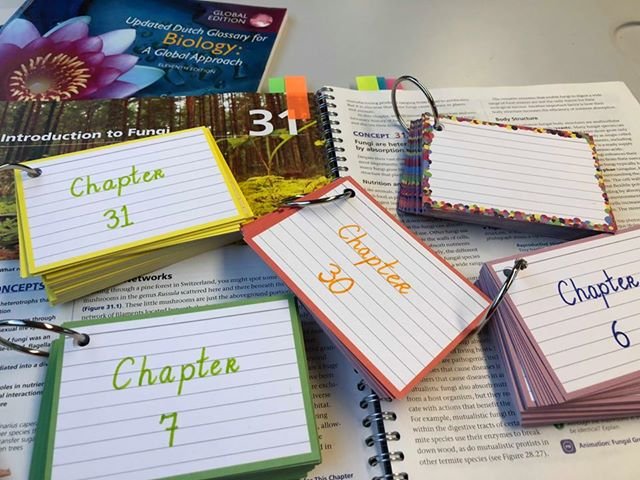
- Flashcards: Quick recall for facts and definitions
Flashcards are a win technique. You can use them to revise concepts, definitions, facts, and figures, and short answers. It is a tried and tested method for years and is proven to be very helpful. They can be carried anywhere and revision can remain on your fingertips.
- Blurting: Sharpens active recall
Blurting is another effective revision strategy. It includes active recall. Recalling the concert or topic again and again. You can either use a highlighter on your book or use a notepad to jot down the important points of a topic. Whatever you have learned about a topic, just write it down on a notepad. You can always go back to your textbook to refer to them again and see if you’ve missed out on anything.
- Feynman technique: Simplifies complex topics
This, among other revision strategies, is backed by an award-winning physicist, Richard Feynman. He claimed that this was the secret to success. This technique consisted of 4 steps:
- Choose a topic that you need to learn and try to remember as much as you can from your notes.
- Teach it to a classmate or someone in need, simplifying the concept, using your own notes. If the classmate or even a child can understand the topic, that means you have simplified it enough to remember.
- Review and learn any gaps in your knowledge.
- Teach it or pretend to teach someone else again. Use your notes less and less as you repeat the process.
Simplifying the topic over and over helps you memorise its key points and recall them during an exam.
- Practice past papers: Builds exam confidence
Past papers are one of the best tools to achieve an A grade in any subject. Also, practicing past papers is one of the best revision strategies as well. Through past papers, you repeatedly get exposed to questions on different topics. Answering them repeatedly and knowing different kinds of questions on the same topic, your concepts are built stronger.
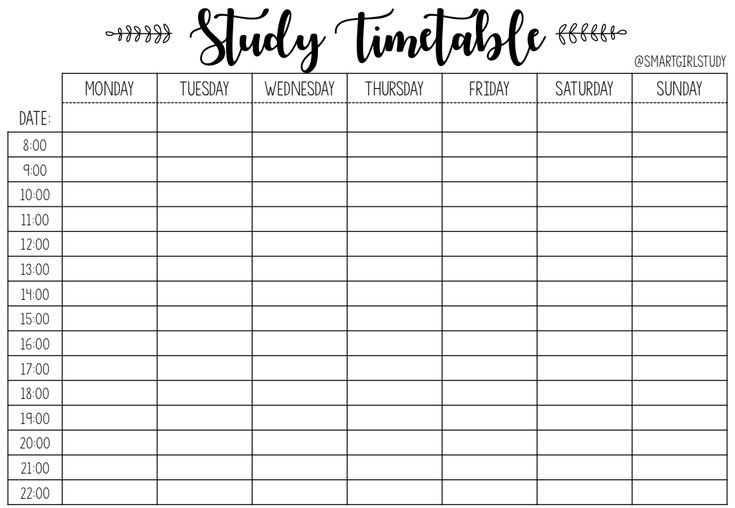
- Revision schedule: Ensures complete syllabus coverage
One of the most common ones is to have a revision schedule. This helps you allocate proper time and attention to each topic. You will never miss out on any topic, whether a strong or a weak one. Through a revision strategy, you will stay aware of how much you have prepared.

- Mind mapping: Visualizes connections between ideas
Mind maps are visual diagrams that connect related ideas and concepts. They’re useful for subjects with lots of interconnected information, like History or Biology, because they allow you to see the “big picture” at a glance.
- Teach others: Reinforces your own learning
Teaching others is always a win-win situation for you as well as the other student. By teaching someone, you will ultimately revise your own notes. When you teach someone, you simplify the concepts and try to make the other student grasp the concept in the easiest possible way. This way, your own concepts get strong.

- Create your own notes: Improves understanding and retention
Writing your own notes instead of just reading from a textbook helps you process and remember information. Summarizing in your own words makes the content easier to recall during exams.
Benefits of revision:
Revision strategies are always beneficial. Below is a list of primary benefits of revision and how they contribute to exam success.
- Boosts confidence and reduces anxiety:
As soon as the exam anxiety kicks in, students get blank. They find hindrance in recalling what they studied. Revising regularly gives topic clarity and gets students prepared. It boosts confidence and prevents exam anxiety during the exam. By making a revision timetable and following it religiously, students become prepared and ready for any questions. With revision, you would not panic and answer everything you know calmly.
- Improves Understanding and Application:
Sometimes, when studying a concept first time, you do not understand it. Through repeated revision, you get the hang of the topic. You will be in a position to connect the dots, draw conclusions, and apply the topics learnt in various areas. Revision helps you grab that concept properly and apply it in the exams effectively. It helps you to understand the concept in greater depth.
- Time management and focused study sessions:
Revision helps you allocate more time to subjects and topics that are more important for the exams. It can help you save time and practice time management instead of reading every topic from scratch, focusing on important topics. This way, you can cover more syllabus in less time. Revision helps you to have effective sessions that help students concentrate on specific topics. Hence, revision allows for a more structured approach to study, ensuring efficient use of time and effort.
- Retains information for the long term:
When you read something for the first time, you retain partial information. Frequent revision of that topic helps you retain it in your long-term memory. You will also keep that memory even after the exam. Through psychological learning, revising a topic again and again through active recall leaves an imprint on the brain. Revision reinforces the topics learned; thus, the brain retrieves that information when needed during exams.
- Reinforce exam strategy and techniques:
Through revision, students can tackle questions very easily. Repeated practice of past papers, including marking schemes and examiner reports, polishes exam strategies and techniques. Regular revision and practice help build confidence and help students frame better answers.
Which revision strategies among these are most effective?
All revision strategies have their own strengths, but the effectiveness of each depends on how and when you use them. For example, the Pomodoro technique is highly effective for maintaining focus during long study sessions, while the 2357 method is best for long-term retention of information.
If your goal is to test your knowledge and exam readiness, then past papers and blurting are the most powerful methods. They mirror the exam environment, sharpen recall, and highlight areas that need more practice. For subjects that require deep understanding, such as A-level Physics or Sociology, the Feynman technique and teaching others work best because they simplify complex concepts and strengthen clarity.
On the other hand, tools like flashcards, mind mapping, and creating your own notes are highly effective for organizing information and quick revisions right before the exam. A revision schedule ties everything together by keeping your preparation structured and ensuring no topic is left behind.
In short, the most effective revision strategy is not about choosing one method; it’s about combining them. For instance, you might use the Pomodoro technique to manage study sessions, flashcards for quick recall, and past practice papers. Blending multiple strategies ensures you learn efficiently, remember for the long term, and perform with confidence on exam day.
Revise your syllabus with VACE Global:
Preparing for exams can be stressful, especially when there’s a lot of syllabus to cover in a limited time. At VACE Global, we make revision easier, smarter, and more effective with structured guidance designed for O-level and A-level students. Whether you’re working towards your first attempt or preparing for a resit, our expert support ensures that you approach exams with confidence.
Here’s what makes us different:
- Expert Faculty: Our highly qualified tutors specialize in O-level and A-level subjects. They not only teach but also train students to apply exam techniques that lead to better performance.
- Merit-Based Scholarship: We believe in rewarding talent. Students can benefit from our merit-based scholarship programs, making quality education accessible and affordable.
- Exam-Oriented Approach: From practicing past papers to breaking down complex topics, our focus is always on helping students succeed in exams.
If you want to make your revision structured and stress-free, enroll now with VACE Global. Our expert faculty and tailored courses will not only prepare you for exams but also help you build a strong academic foundation for the future.
FAQs
1. Why are revision strategies important for O-level and A-level exams?
Revision strategies help students manage their time, focus on weaker areas, and improve recall. Without a plan, it’s easy to feel overwhelmed by the amount of content in O-level and A-level subjects.
2. How do revision strategies affect my O-level result?
Your O-level result depends on how well you can recall and apply what you’ve studied. Strategic revision ensures you cover all topics, practice past papers, and enter the exam with confidence.
3. What are some effective revision strategies for A-level students?
A-level students should create a study timetable, break topics into manageable chunks, use active recall methods like flashcards, and practice essay writing or problem-solving under timed conditions.
4. Can revision strategies help if I am preparing for an A-level resit?
Yes, especially for an A-level resit, where you already know your weak points. A tailored revision strategy allows you to focus on those areas and avoid repeating past mistakes.
5. How should I revise for different subjects like O-level Mathematics or A-level Sociology?
- O-level Mathematics → Practice past papers and timed problem-solving.
- A-level Sociology → Summarize theories, practice essay writing, and learn key case studies.
- A-level Physics → Revise formulas, solve application-based questions, and focus on practical understanding.
- IGCSE ICT → Balance theory revision with hands-on practice.
6. How early should I start revision before exams?
Ideally, revision should start at least 6–8 weeks before exams. This gives you enough time to cover all topics, identify weak areas, and practice under exam conditions.
7. Can tutoring help improve my revision strategies?
Yes, having guidance from expert tutors can make revision more structured. At VACE Global, our O-level tutors and A-level tutors provide personalized study plans to help students revise more effectively and achieve better results.