
The world is rapidly moving toward digital methods of working and learning. Most workplaces, universities, and institutions now rely on technology for tasks that once required paper, and the Cambridge International is now taking steps in the same direction by introducing Digital exams.
From 2026, some Cambridge exams will shift from paper to computer. This is bringing a new era of digital exams and assessments. This new update of examinations is still not completely implemented on every exam board, such as AQA, Edexcel, Cambridge, or OCR. The aim behind that updated exam strategy is to make exams more accessible and secure. In the future, Cambridge will also digitalize the O-level exams.
These digital exams will make the exam criteria more rigorous, so students need to be better prepared to improve their IGCSE grades.
In this guide, you will get to know what digital exams are, how Cambridge introduced them, and which subjects are tested through digital exams for now.
Key Takeaways:
- Digital exams will begin rolling out from 2026, starting with selected subjects and schools.
- Instead of writing, students will be tested through digital exams on computers.
- Not all O-level subjects are tested digitally yet. The rollout is still not complete.
- Preparing for this update early matters. Practice your typing speed.
What are digital exams?

Digital exams are assessments carried out electronically instead of on paper. They provide several benefits, such as greater flexibility, improved accessibility, and a lower environmental footprint.
According to Cambridge International, the first countries that will receive this rollout of digital examinations such as Europe, the Middle East and North Africa, and the US. Six subjects will experience digital exams by June 2026. Cambridge has listed down the exams and subjects that will be conducted digitally:
- AS English General Paper
Multiple-choice questions on the following subjects will be tested digitally:
- IGCSE Accounting
- Economics
- Biology
- Chemistry
- Physics.
Cambridge makes sure that these digital exams will be equally reliable and valid as compared to the paper-based exams. This will mark the start of the rollout of digital exams across the full Cambridge IGCSE and International AS and A Levels.
Which subjects will have digital exams?
The official letter from Cambridge regarding Digital exams:
The official letter by Cambridge about the digital exams came out on 01st October 2024. The letter informs all the important details regarding this rollout. The letter states:
Cambridge has officially announced that digital examinations will begin in June 2026. In this first phase, students in Europe, the Middle East, North Africa, and the US will be able to sit digital exams for Cambridge International AS English General Paper and MCQs for IGCSE Accounting, Economics, Biology, Chemistry, and Physics on laptops. These digital assessments will maintain the same standards of validity, reliability, and comparability as traditional paper exams and mark the start of a global rollout across full IGCSE and A Level curricula.
Selected schools can now join the Early Adopter Programme, gaining exclusive access to Cambridge’s new digital examination platform. Participating schools will take digital mock tests, attend familiarisation sessions, and test new features, providing feedback that will help refine the system.
Cambridge’s digital transition includes two pathways:
- Migratory, where existing paper exams are moved to digital with minimal changes; and
- Transformational, where new curricula and innovative assessment formats will be introduced, focusing on real-world skills like collaboration, research, data handling, and communication. Cambridge aims for 85% of its high-stakes qualifications to offer a digital option by 2033.
Schools worldwide can also express interest in the Digital Mocks Service for January–March 2025. This service provides both auto-marked and examiner-marked results, helping teachers identify students’ strengths and revision needs. Since its launch in 2023, students in 31 countries have taken digital mock exams in 16 subjects.
Which subjects will have digital exams?
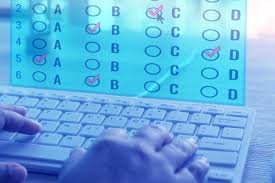
Only a small section of subjects is confirmed to have digital exams starting in 2026. The full subject list has not been disclosed by Cambridge yet. What has been disclosed so far is:
- A limited group of subjects will be a part of digital exams starting from 2026.
- These will be subjects that can naturally suit on-screen assignments, such as language, literature, language acquisition, and some humanities subjects, such as sociology, psychology, and arts and design.
These subjects are currently confirmed; the full list will be disclosed later after the rollout takes place.
Subjects that will be assessed on the Paper:
Subjects that involve a lot of writing or diagrams will be digitised later. This may consist of subjects like:
- Mathematics
- Sciences such as Biology, Chemistry, Physics
- Visual arts
- Design technology and other practical subjects
How will Digital Exams work?
The digital exams will take place in schools using secure exam software on approved devices. Distal exams in 2026 will be the best example of technology in Education.
The technology involved:
Below is a list of technologies involved in conducting these digital exams:
- Devices: Exams will be conducted through a laptop or desktop computer approved or provided by the school.
- Secure exam software: The most important element required is a secure assessment platform. For the IB digital exams, a software has been developed in partnership with RM (a major digital assessment provider that works with schools and exam boards internationally)
What to expect on the day of your digital exam:
Below is a simplified guide provided by Cambridge itself, to help you understand what to expect during your digital exam (computer-based sections, not the Speaking test.
- On the exam day
- Your exam centre will guide you on where to keep your bags and electronic devices. You’ll see a timer on your computer screen throughout the exam. Keep your photo ID ready, and confirm with your centre in advance which ID is required.
- Mobile phones and electronic items must remain inaccessible for the entire duration of the exam.
- Your centre will take your photograph for B2 First, C1 Advanced, and C2 Proficiency, and may record your passport or ID number. This is essential if you plan to use your results for immigration or university applications. For C1 Advanced candidates in Asia, Australasia, or Africa, the test-day photo upload is mandatory to receive results.
- Listen carefully to the invigilator and follow all on-screen instructions. If you need help, have a question, or want to leave the room, raise your hand. Avoid talking or looking at other candidates’ screens.
- For the Listening test, inform the invigilator immediately if you cannot hear the audio.
- At the end of each test
- If you used any rough paper, leave it on your desk. Do not take it with you.
- Remain seated until the invigilator dismisses you.
- Report any issues to the invigilator right away.
- Remember: you still cannot access your phone or electronic items during breaks.
Pros and Cons of Digital Exams:
Digital exams are transforming the way students are assessed, but like any major shift, they come with both strengths and challenges.
Advantages of digital exams:
- Typing can be a faster option than writing: Many students are able to communicate their ideas faster and more clearly when typing, particularly in essay-focused subjects such as English or Global Politics.
- Cleaner and easily assessible by the examiner: Examiners won’t need to decipher handwriting anymore, reducing the chance of losing marks due to unclear or messy writing.
- Improved accessibility: Digital exams offer features like adjustable text size, colour contrast, and screen settings—making the experience more inclusive for students with diverse learning needs.
- Interactive format of questions: As the digital system evolves, exams may include videos, data sets, simulations, or interactive diagrams, especially in science-based subjects.
- Streamlined process: With no printing and fewer physical materials, digital exams significantly lower environmental impact. Instant digital submissions also make exam processing much more efficient.
Challenges and Concerns:
- Variation in typing speed: Students who type slowly may find extended-response questions more demanding, making regular typing practice important.
- Possible screen fatigue: Spending up to two hours on a computer can lead to eye strain or tiredness, especially for students unfamiliar with long screen sessions.
- Risk of technical problems: Even with backup systems in place, issues like device failures, power outages, or software errors can still create anxiety.
- Unequal access to technology: Not all schools have the same level of digital infrastructure, which may result in different exam experiences across centres.
What are the benefits of digital examination?
Digital examinations bring a modern, streamlined approach to assessment. They make the exam experience smoother, more accessible, and more efficient for both students and exam providers. With user-friendly tools and faster processing, digital exams enhance clarity, comfort, and accuracy.
Key benefits include:
- Cleaner, more organised answering
- Faster, clearer responses
- Enhanced accessibility
- Reduced logistical challenges
- Improved marking accuracy
- Higher exam security
- Overall smoother experience
- No risks of exam paper leaks
When will the Cambridge Digital Exams roll out?
According to Cambridge, the official rollout will take place by June 2026. The first rollout includes Cambridge International AS English General Paper and multiple-choice components of IGCSE Accounting, Economics, Biology, Chemistry, and Physics, initially available in Europe, MENA, and the US.
How to prepare for Digital Exams?
To be prepared for digital exams, you need to be familiar with the new assessment pattern and develop those practical skills that will help you ace them. Below are some of the most important steps to take:
- Practise typing under time pressure: If you usually write essays by hand, start typing your practice responses now. Focus on improving both speed and accuracy; many students save several minutes in exams simply by becoming more confident typists.
- Get used to your school’s digital exam system: Ask your IB coordinator whether your school provides practice papers or demo versions of the exam software. The more familiar you are with the interface, the more relaxed you’ll feel on exam day.
- Learn to show your working digitally: For maths and science papers, practise using digital tools such as:
- equation editors
- drawing/annotation tools
- digital graphing techniques
Some schools also allow photo uploads of handwritten work for specific tasks, so confirm what applies to your subjects.
- Build your screen stamina: Digital exams require extended screen time. Incorporate laptop-only revision sessions to get used to the on-screen format, and remember to take short breaks to reduce eye strain.
- Prepare for digital exam logistics: Before your first digital mock or practice session, make sure you understand:
- How to log in
- How is your work saved
- How to review and submit your answers
- Who to contact if there’s a technical issue
This preparation helps minimise unnecessary stress on the day.
- Stay focused on essential exam skills: Even though the format is changing, the core expectations remain the same. Clear explanations, strong analysis, organised structure, and accurate working are still crucial.
How does VACE Global help you prepare for Digital exams?
VACE Global ensures students are fully prepared for the shift to digital assessments by combining expert guidance, hands-on digital practice, and tailored resources. Our approach helps learners build confidence with computer-based tools while strengthening their academic performance.
Here’s how VACE Global prepares you:
- Expert Cambridge-qualified teachers who guide students through the new digital exam format.
- Digital mock tests and practice sessions to build familiarity with typing, navigation, and on-screen tools.
- Downloadable digital resources and past papers designed to match the online exam experience.
- Interactive learning materials that help students practice real-time digital problem-solving.
- Typing-based practice to improve speed, accuracy, and clarity in digital answering.
- Personalised support and feedback to ensure every student is comfortable and confident on exam day.
Ready to master the future of exams? Join VACE Global today and start preparing confidently for Cambridge Digital Exams!
Conclusion:
Digital exams are the future of global education, and Cambridge’s shift in 2026 signals the beginning of a new, more accessible, and more efficient assessment era. While the transition comes with a learning curve, the long-term benefits, speed, clarity, accessibility, and innovation are undeniable.
With VACE Global’s expert coaching, comprehensive resources, and digital-focused preparation methods, students can confidently step into this new chapter of examination.
FAQs:
1. What are Cambridge digital exams?
They are computer-based versions of Cambridge assessments, offering the same standards as paper exams but with enhanced digital tools.
2. Which subjects are going digital first?
AS English General Paper and MCQs for IGCSE Accounting, Economics, Biology, Chemistry, and Physics in June 2026.
3. Will digital exams be harder?
No. The difficulty level remains the same—only the format changes. The content, marking criteria, and curriculum stay consistent.
4. Do students need fast typing skills?
Basic typing helps, but Cambridge designs digital exams to be user-friendly for all students. Practice can significantly improve comfort.
5. Can VACE Global help me prepare?
Absolutely. With digital mock tests, expert tutoring, and downloadable resources, VACE Global prepares you for both academics and the digital exam format.