
After months of structured practice using effective revision strategies and completing the Cambridge syllabus, not achieving the grades you expected indicates a hidden reason: Stress. You studied. You revised. You stayed up late trying to cover everything. Yet somehow, your grades don’t reflect your effort.
The hidden culprit behind this lack of achievement is stress. It might not be big enough to grab your attention during exam preparation, but it gives you huge blows to your result.
VACE Global understands that with exam preparation, you also need motivation and confidence. That is exactly why our students appear in exams successfully and achieve their desired grades.
What is Stress?
Stress is the body’s natural response to any demand or challenge, especially when a situation feels overwhelming or beyond one’s ability to cope. According to the World Health Organization, stress can be defined as “a state of worry or mental tension caused by a difficult or uncertain situation.” While a small amount can be helpful in keeping students alert and motivated, excessive or prolonged stress can negatively impact both mental well-being and academic performance. During exam periods, this response often becomes heightened, affecting how students think, focus, and perform.
Stress and academic performance:
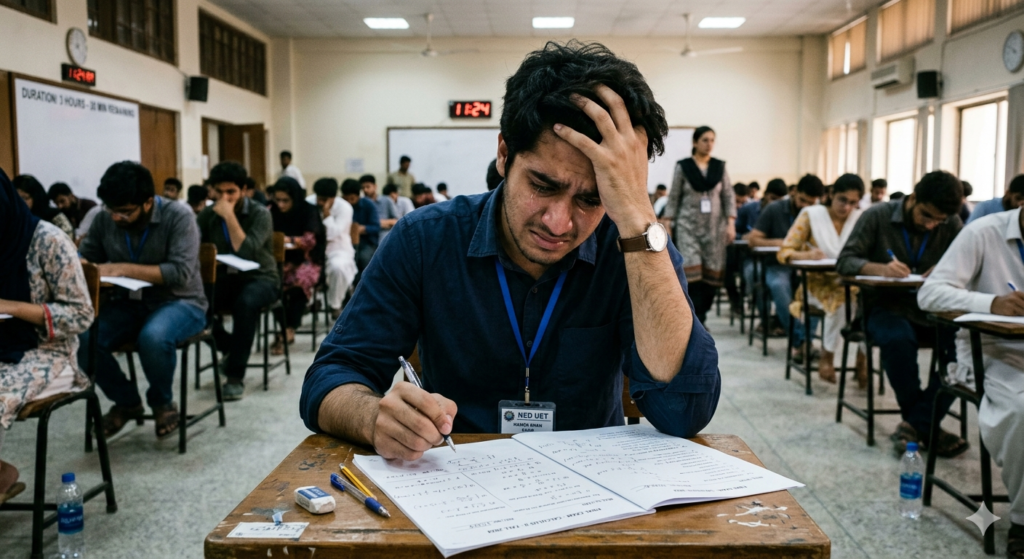
Stress and academic performance are closely linked. While a little academic pressure can help students stay focused, too much stress reduces concentration, weakens memory, and makes it harder to understand and recall information. This often creates a gap between what students know and how they perform in exams.
Over time, unmanaged stress affects consistency and confidence. Students may study for hours but retain less, make mistakes in exams, or struggle with time management. As a result, their grades may not reflect their true potential.
Managing stress effectively is key to better performance. When students stay calm and follow the right strategies, they are more focused, confident, and able to perform at their best.
Effects of stress on your grades:
Stress can directly impact your grades by affecting how you think, focus, and perform during exams. High stress levels can lead to poor concentration, making it harder to understand and retain information while studying.
During exams, it may cause you to forget answers, misread questions, or make careless mistakes. Even with strong learning of the particular O-level subject or A-level subject, stress can make you go blank. Over time, it can also reduce confidence and motivation, leading to inconsistent performance. As a result, your grades may drop, not because of a lack of effort, but because stress is limiting your ability to perform at your best.
Reasons why stress is harmful?
1. Disrupts Your Memory and Recall
One of the biggest ways stress affects your grades is by interfering with your memory.
You might understand a concept perfectly while studying, but during exams:
- Your mind goes blank
- You struggle to recall key points
- You forget answers you actually know
This happens because stress limits your brain’s ability to retrieve stored information, leading to lower performance despite preparation.
2. Reduces Focus and Learning Efficiency
Stress makes it harder to concentrate.
Instead of absorbing information, your mind:
- Keeps worrying about outcomes
- Gets distracted easily
- Loses the ability to stay present
This means you may spend hours studying, but retain very little, directly affecting your academic performance.
3. Leads to Poor Exam Execution
Even if you’re well-prepared, stress can affect how you perform in the actual exam.
Common effects include:
- Misreading questions
- Rushing through answers
- Making careless mistakes
In many cases, students lose marks not because they lack knowledge, but because stress affects how they apply it under pressure.
4. Lowers Confidence and Increases Self-Doubt
Stress leads to negative thinking and self-doubt:
- “I’m not prepared enough.”
- “What if I fail?”
- “Others are doing better than me”
This mindset reduces confidence, which is crucial for strong performance. When confidence drops, your ability to think clearly and answer effectively also declines.
5. Leads to Burnout
Continuous stress during exam preparation can lead to burnout.
You may feel:
- Mentally exhausted
- Unmotivated
- Overwhelmed by simple tasks
Burnout reduces productivity and makes it harder to stay consistent, ultimately affecting your grades over time.
Tips to avoid stress during exams:
Managing exam-stress starts with having the right approach to preparation. Instead of last-minute cramming, focus on building a consistent study routine with clear goals. Break your study time into manageable sessions, take regular breaks, and prioritise understanding over memorisation.
Simple habits can also make a big difference: get enough sleep, stay organised, and practise past papers to build familiarity with exam patterns. Most importantly, give yourself time to relax and reset. A calm mind performs far better than an overwhelmed one, and avoids common mistakes students make in their CIE.
How VACE Global Builds Confidence with Preparation
At VACE Global, preparation goes beyond just covering the syllabus; it focuses on building confidence through clarity and structure. Students are guided with proven study strategies, regular practice, and continuous feedback so they always know where they stand.
With personalised support, expert teachers, and structured learning systems, students feel more in control of their preparation. This reduces uncertainty and helps them approach exams with a calm, confident mindset, because confidence comes from knowing you are fully prepared.
Learn with VACE Global and appear in your CIE stress-free!
FAQs
1. How can I reduce stress during exams quickly?
Focus on deep breathing, take short breaks, and avoid overloading yourself with too much at once.
2. Can better preparation help with anxiety?
Yes, structured and consistent preparation builds confidence and significantly reduces stress.
3. Why don’t I feel relaxed even after studying?
This usually happens due to a lack of clarity or fear of performance, not a lack of effort.