
Traditional schooling is becoming too old school with the advancement of technology in education. Would homeschooling in Pakistan be the only solution you need in 2026? Is homeschooling legal in Pakistan?
As a parent, you have the legal responsibility to ensure your child receives a suitable education. This can happen at school or at home—it’s your choice.
Over the years, the focus of parents and students has shifted more towards flexible learning. They started seeking for more personalized experience, instead of traditional schooling. It is time you should have a thought about shifting to a better and flexible experience.
This blog will help you understand if homeschooling in Pakistan can be an option for your child as well. It highlights the legal framework, the methods, and the pros and cons of homeschooling.
For informational blogs, stay connected with VACE Global.
What does homeschooling in Pakistan mean?
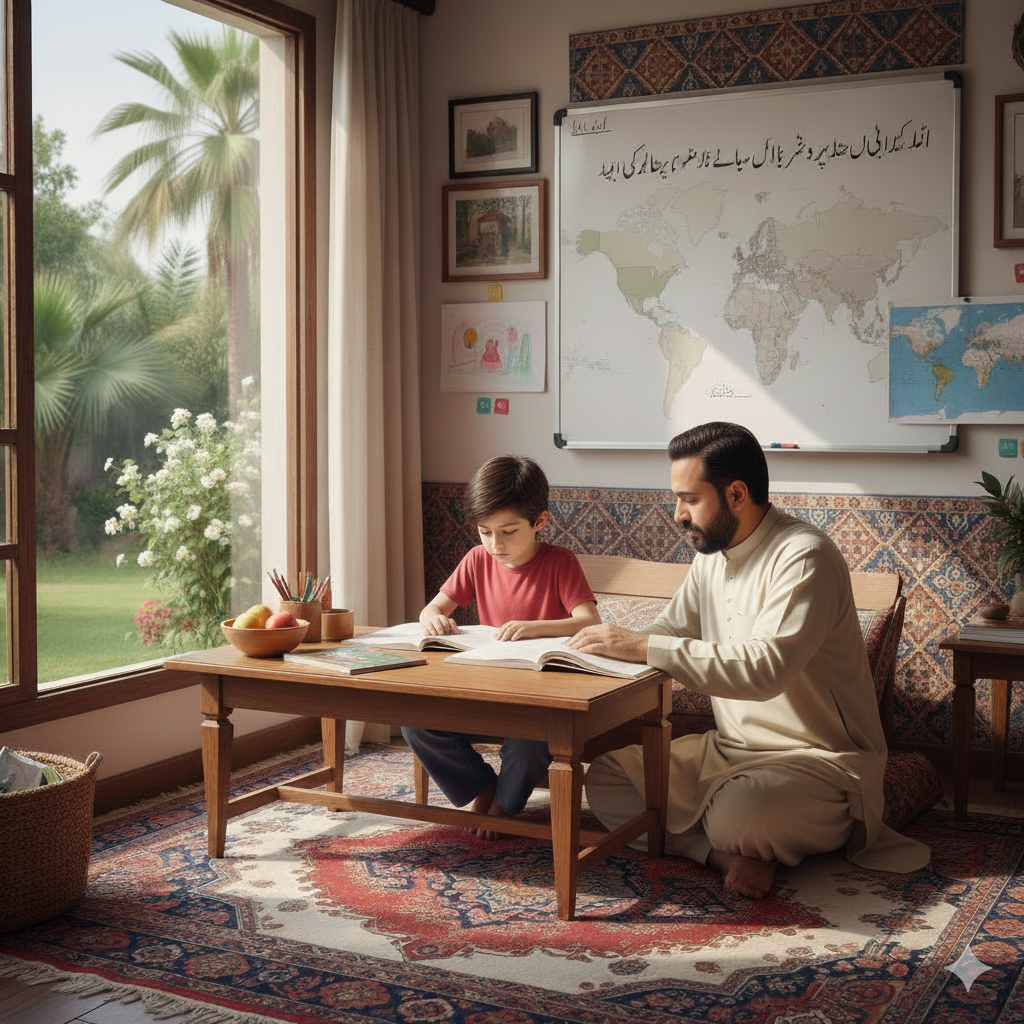
Homeschooling in Pakistan refers to an alternative form of education where parents choose to educate their children at home instead of enrolling them in traditional schools. It allows families to design a learning approach that suits their child’s pace, interests, and learning style. Homeschooling can follow local curricula, international systems such as Cambridge O Levels, A-levels, IB, or a blended approach using online resources, online tutors, and structured study plans.
In Pakistan, homeschooling is largely unregulated, which gives parents the flexibility to decide how, what, and when their children learn. Some families homeschool full-time, while others use it as a hybrid option alongside online schools or private tuition. This approach is often chosen due to concerns about rigid school systems, academic pressure, safety, health reasons, or the desire for personalised learning.
Homeschooling in Pakistan also places a strong responsibility on parents to ensure academic quality, consistency, and proper assessment. Parents often rely on online learning platforms, subject specialists, and external examinations to validate their child’s progress and prepare them for future education pathways.
Is homeschooling legal in Pakistan?
Not actually. Homeschooling is not officially regulated under Pakistan law or by the Ministry of Federal Education and Professional Training. This means that parents in Pakistan can choose to homeschool their children if it is a more viable option compared to traditional schooling.
Unlike many other countries, Pakistan has no formal legal framework governing homeschooling yet. The Ministry of Federal Education and Professional Training does not impose specific rules or registration requirements for families who choose to homeschool.
As a result, parents are free to educate their children at home without official approval or oversight. However, this freedom also places full responsibility on parents to ensure their children receive a high-quality education that equips them with the knowledge and skills needed for future academic and career opportunities.
Parents can prepare their children for any board they wish their child to pursue and register them as a private candidate for exams directly through Cambridge.
Why should parents choose homeschooling in Pakistan?
Homeschooling is becoming an increasingly popular choice among parents in Pakistan for several key reasons:
- Focus on quality education and academic growth: Many parents opt for homeschooling to maintain greater control over what and how their children learn. Certain curricula prioritise conceptual understanding and critical thinking rather than rote memorisation, helping students achieve stronger academic outcomes.
- Impact of increasing inflation: Rising inflation in Pakistan has significantly increased the cost of traditional schooling, including tuition fees, uniforms, transport, books, and extracurricular expenses. For many families, homeschooling has become a more cost-effective alternative, allowing parents to control educational spending and invest only in essential learning resources, curricula, and subject-specific support. Online homeschooling and flexible tuition options also help families manage quality education without the financial burden of full-time private schools.
- Increase in child safety concerns: Concerns about children’s physical safety, mental well-being, and exposure to bullying have led many parents to reconsider conventional schooling. Issues such as unsafe commuting, overcrowded classrooms, and increasing reports of bullying or peer pressure make homeschooling an appealing option. By learning from home, children are educated in a secure, familiar environment where parents can closely monitor their well-being while ensuring consistent academic progress.
- Cultural and religious considerations: Some families prefer homeschooling to ensure their children are educated in an environment that aligns with their cultural values and religious beliefs, without exposure to influences they may find unsuitable in conventional school settings.
- An effective option for children with special needs: Homeschooling can be particularly beneficial for children with ADHD, autism, or other learning differences. A personalised learning environment allows these children to progress at their own pace, avoid stigma, and develop their strengths with confidence.
- Support for gifted and talented children: Children with exceptional abilities in academics, sports, or the arts often require flexible schedules and customised learning paths. Homeschooling allows talented students, such as aspiring athletes or academically advanced learners, to balance training, practice, or accelerated coursework more effectively than traditional schooling.
How does homeschooling work in Pakistan?
Although homeschooling offers a flexible and personalised approach to education, there are several important factors to consider before getting started.
- Choosing the right homeschooling curriculum: A curriculum defines the subjects, lessons, and academic standards your child will follow. Selecting the right curriculum is crucial, as it directly impacts your child’s future academic and career opportunities. For instance, opting for an International British Curriculum can open doors to universities worldwide, giving your child globally recognised qualifications.
- Access to learning resources: By choosing homeschooling, parents take on a more active teaching role across multiple subjects. To manage this effectively, many families use online homeschooling platforms that provide structured lessons, subject experts, and interactive content. While these tools reduce the teaching burden, parental involvement remains essential, especially in early grades, where children need consistent guidance, motivation, and support. This requires a significant investment of both time and resources.
- Examinations and certification: How and where your child sits for exams depends on the chosen curriculum and learning platform. For example, students following the International British Curriculum typically appear for their assessments at authorised Cambridge exam centres, which operate in over 130 countries. These exams provide internationally recognised certification and help ensure a smooth transition to higher education.
Homeschooling Approaches:
There is no single “correct” approach to homeschooling, and many families choose to combine different methods based on their child’s needs and learning style. Common homeschooling approaches include:
- Structured homeschooling: This method closely resembles traditional schooling. Children follow a set timetable, use textbooks and workbooks, and study subjects in an organised sequence. It offers consistency and clear academic progression, which suits learners who prefer routine and structure.
- Semi-structured homeschooling: Core subjects such as Maths and English are taught in a more formal way, while other areas of learning develop naturally through projects, hobbies, and everyday experiences. This approach strikes a balance between guidance and flexibility.
- Unschooling or child-led learning: In this model, children take the lead in their education, learning through their interests and natural curiosity. Parents act as facilitators rather than instructors. It relies on the belief that children are intrinsically motivated to learn when given the freedom to explore.
- Online programmes or curriculum providers: Online schools and curriculum providers such as Wolsey Hall, Minerva, and InterHigh offer complete learning programmes, including structured lessons, academic plans, and teacher support. These options are especially useful for working parents or families seeking external structure and academic accountability.
Homeschooling costs in Pakistan:
The overall cost of homeschooling varies based on several factors, including the chosen curriculum, learning platform, student’s grade level, and selected subjects. In Pakistan, the Cambridge (International British Curriculum) is the most widely used homeschooling option, and its total cost depends on the following:
- The chosen online platform and its tuition fees
- Textbooks and learning materials
- Examination and assessment fees
The figures outlined below are indicative estimates only. Actual costs may vary based on the number of subjects taken, the examination center, and whether textbooks are purchased in digital or printed format.
Primary Stage Homeschooling Costs
For primary-level students, annual online homeschooling fees typically range from $639 to $1,839 for three subjects. Textbook expenses usually fall between $100 and $200, and there are no examination fees at this stage.
Secondary Stage and IGCSE Homeschooling Costs
At the lower secondary level, annual online homeschooling fees for six subjects generally range from $2,305 to $3,642. Textbooks may cost between $400 and $500, with no additional examination fees for Lower Secondary Years 1 and 2.
For IGCSE students, annual online homeschooling fees for six subjects usually range from $2,486 to $4,968. Textbook costs are approximately $300 to $400, while examination fees, depending on the exam center, can collectively range from $1,000 to $2,000.
AS Level Homeschooling Costs
For AS and A Level students, annual online homeschooling fees typically range between $1,752 and $3,760 for four subjects. Textbooks generally cost $400 to $500, and exam fees, based on the subject, exam type, and center, usually fall within $1,000 to $2,000 in total.
Challenges of Homeschooling in Pakistan:
While homeschooling in Pakistan offers considerable legal freedom, it also presents certain challenges. The lack of formal regulation means parents must independently manage resources, support systems, and their child’s overall educational development, including social growth.
Challenges of homeschooling in Pakistan:
- Limited access to structured resources and institutional support due to the absence of a formal framework
- Concerns about children’s socialization and fewer daily peer interactions
- Greater responsibility on parents for planning, assessment, and long-term academic direction
- Lack of exposure and confidence-building
These challenges can be addressed by connecting with homeschooling communities, joining co-ops, and involving children in extracurricular activities that encourage regular social interaction.
Resources you need for Homeschooling in Pakistan:
You don’t need expensive materials to homeschool effectively, but having the right resources can make the process more structured and manageable.
Textbooks and workbooks: CGP textbooks and revision guides are widely used for core subjects and exam preparation. They are exam-focused, easy to follow, and suitable for independent study at home.
Online learning platforms and academic support: For exam-level students, structured online tuition plays a vital role in successful homeschooling. VACE Global provides expert-led online classes, personalised study plans, and exam-oriented preparation for O Level, IGCSE, and A Level students. With subject specialists guiding students through the syllabus, concept-based teaching, regular assessments, and access to past paper practice, VACE Global helps remove uncertainty and ensures students stay on track academically.
VACE Global is especially helpful for homeschooling families who want professional guidance, accountability, and a clear academic roadmap without the pressure of traditional schooling.
Exam boards
Homeschooled students typically sit exams as private candidates. Commonly chosen exam boards include:
- Edexcel (Pearson): Popular for IGCSEs and often more accessible for private candidates
- Cambridge International: Designed specifically for international and private candidates
- AQA: Widely used by schools for GCSE and A Level examinations
Many families choose IGCSEs because they are internationally recognised and particularly suitable for private exam entry.
How does VACE Global support homeschooling?
VACE Global provides structured, expert-led online education designed to make homeschooling effective, organised, and stress-free for both students and parents. Instead of parents managing everything alone, VACE Global offers a clear academic framework supported by qualified teachers who understand international curricula such as O Level, IGCSE, and A Levels.
Students benefit from personalised learning plans specialized to their pace and academic goals. Classes focus on strong concept-building rather than rote memorisation, helping learners develop confidence and long-term understanding. Regular assessments, past paper practice, and continuous feedback ensure students stay on track and are fully prepared for exams as private candidates.
For parents, VACE Global reduces the burden of lesson planning, syllabus tracking, and exam preparation. With expert teachers, structured timetables, and ongoing academic support, families can enjoy the flexibility of homeschooling without compromising on educational quality.
Enroll with VACE Global, and get the best experience of homeschooling in Pakistan.
Conclusion:
Homeschooling in Pakistan offers families the freedom to personalise education, reduce academic pressure, and focus on meaningful learning. While the lack of regulation places greater responsibility on parents, the right resources and academic support can make homeschooling a highly successful option. With globally recognised curricula and professional guidance from platforms like VACE Global, students can receive a high-quality education that prepares them for international examinations and future academic pathways.
FAQs:
1. What is homeschooling, and how does it work in Pakistan?
Homeschooling in Pakistan is an alternative education system where parents teach their children at home instead of sending them to traditional schools. It is unregulated, giving families the flexibility to choose curricula, schedules, and teaching methods while being responsible for their child’s learning outcomes.
2. Can homeschooled children take international exams like IGCSE or A Levels?
Yes. Homeschooled students can register as private candidates for exams through recognised boards like Cambridge International, Edexcel, or AQA. Platforms like VACE Global provide guidance, structured lessons, and exam preparation to help students succeed.
3. What are the main benefits of homeschooling?
Homeschooling allows personalised learning at the child’s own pace, reduces academic pressure, supports children with special learning needs, and accommodates cultural or religious preferences. It also offers flexibility for gifted or talented children to explore their interests fully.
4. Do parents need to be qualified teachers to homeschool their children?
No, parents do not need formal teaching qualifications. However, they must dedicate time to guide their children, especially in lower grades. Using structured platforms like VACE Global can provide professional support and make the learning process more effective.
5. How do homeschooled children socialise?
Socialisation can be achieved through homeschooling communities, co-ops, extracurricular activities, sports clubs, and group classes. Structured online platforms and local homeschooling networks also provide opportunities for peer interaction and collaborative learning.