
The advanced educational era has led to students breaking the rigid cycle of educational systems. Instead of sticking to the same curriculum and studying the same set of subjects, students are now exploring new opportunities and career options. The hype of engineering and medicine has now settled down. Students now check out international curricula, such as the American and the British curricula.
With the increase of interest in different curricula, the debate of Edexcel vs Cambridge has now subsided. Now, students compare more international options and opportunities that can change the course of their fields. Whether studying in Pakistan or the UAE, the British curriculum is in demand now.
This blog provides a detailed overview of the British curriculum, its syllabus, and key stages. This is a detailed and comprehensive blog covering every aspect of the British curriculum.
What is the British curriculum?
The British curriculum, also known as the English National Curriculum, is currently studied in 45% of international schools around the world. The British curriculum begins in the early years of foundation. It starts with the age group of three to five, progressing to the respective GCSE and IGCSE qualifications, and to the older students. It is one of the most commonly studied curricula.
This curriculum is based on the UK curriculum, dividing education into key stages. These key stages cover the whole education journey of a student. This skill-based curriculum is enhanced by excellent and supporting resources such as textbooks and other materials.
This curriculum is diverse enough to fit into the English Public Examination system, the GCSE, and A-levels, which are accepted by the top universities. It is known for its high academic standards and well-rounded educational approach.
Where is the British curriculum studied and offered?
The British curriculum is widely offered across the globe, with thousands of English-medium schools adopting it in regions such as Asia, Europe, the Middle East, Africa, and the Americas. Many international schools follow Cambridge Assessment International Education (CAIE) or Edexcel frameworks, ensuring consistency in academic standards. Its global presence makes it an ideal choice for expat families and students seeking internationally recognized qualifications like IGCSE and A Levels.
Key elements of the British curriculum syllabus:
The following are the key elements of the British curriculum:
- Broad and Balanced Curriculum: The best feature of this curriculum is that it offers a broad and balanced study curriculum that ensures students develop a wide range of skill sets and knowledge. It covers core subjects such as Math, Science, English, etc, and additional subjects like arts, humanities, and creativity.
- Child-centered approach: This curriculum focuses on a child-centered and personalized learning approach. This means that the child’s interests and needs are met while building critical thinking skills.
- Optional subjects: A wide range of optional subjects lets students explore and build their interest in different subjects. It offers education with choices such as arts, music, drama, and more. In modern education, only core subjects are not enough.
- Emphasis on Critical Thinking: The main aim of this curriculum is to focus on and build critical thinking skills in students. It motivates students to learn through questioning, problem-solving, and creative thinking.
British curriculum for primary schools:
The British curriculum is one of the most well-organized ones, with key stages to guide education from early childhood to secondary level. Below is the elaborated version of each key stage to make it understandable and easy to interpret.
The structure and Stages:
The key stages are divided according to the age groups.
Pre-Kindergarten ( 3-5 years old):
The students in the age group of 3 to 5 experience the Early Years Foundation Stage (EYFS). This stage focuses on play-based learning, helping children to develop basic skills. Schools offer stimulating and fun programs to develop skills. It builds and focuses mainly on these seven areas:
- Communication and language
- Physical development
- Personal, social, and emotional development
- Literacy
- Mathematics
- Understanding the world
- Expressive arts and design
The learning activities involve playing, exploring, and developing critical thinking.
Kindergarten to 10th Grade ( 5 to 16 years Old):
After the EYFS, the next stages are divided further into four stages from KS1 – KS4. Each stage has its own techniques and assessment methods.
- Key Stage 1 (KS1): Targets the age of 5 – 7. It includes the beginning of education of core subjects such as English, Maths, and Science through activities.
- Key Stage 2 (KS2): This stage targets the age group of 7 – 11 years. This stage is more about students deepening their understanding of core subjects and beginning standardized assessments (SATs).
- Key Stage 3 (KS3): Targets age 11 – 14-year-old students. This stage fulfills the primary and secondary education. A broader curriculum is introduced, including geography, history, and languages.
- Key stage 4 (KS4): This stage is for the age group of students aged 15 – 16 years. This is the age group that appears for the General Certificate Secondary Education (GCSE)
British curriculum for secondary schools:
The British curriculum for secondary schools targets an advanced age group. The key stage 3 is the beginning of secondary school. This is considered a pre-university stage for students where they opt for A-levels or equivalent qualifications. In this stage, students choose A-level subjects for specific career fields.
Grade 11-12 (16 to 18 years old):
The British curriculum is determined by the end-of-school assessments. The grades 11 – 12 mark the end of the AS and A-level years.
British Curriculum subjects, Teaching Approach, and Assessments:
Parents and students can understand the structure of this curriculum by exploring the subjects and teaching approaches:
Subjects offered:
- Core Subjects: The core subjects include English, Mathematics, and Science. These are mandatory and build the foundation of every student.
- Optional subjects: There is a wide list of optional subjects that this curriculum offers:
- Physical Education
- Humanities: History, Geography, Religious Studies
- Arts and creativity
- Technology and computing
- Citizenship and PSHE
Teaching Approach:
This curriculum focuses on:
- Differentiated Instruction: This means that each child is different, and each one of them has a different approach to learning. This approach is good for the diverse needs, interests, and abilities of students.
- Project-based learning: It is a teaching method where students work collaboratively on a complex, real-world problem or project over an extended period, developing both subject knowledge and crucial skills
- Student-centered learning: This emphasizes student-centered learning instead of teacher-led instructions.
- Play-based learning: It is a popular curriculum for kids in the Early Years Foundation Stage (EYFS).
The Assessment breakdown:
This curriculum is well known for its structured and rigorous assessment methods. It offers:
- Continuous assessments: Assessments are a part of the very beginning and last till the end of the year. In the EYFS, the assessments are done through observations.
- Formative and Summative assessments: The formative assessments monitor the progress of students after a specified interval and help students buckle up for the future. The summative assessments are the end-of-the-year assessments that prepare the overall grade in every subject.
- Coursework and practicals: This curriculum tests different concepts of various subjects practically and through coursework, adding to the final grade.
The Grading System:
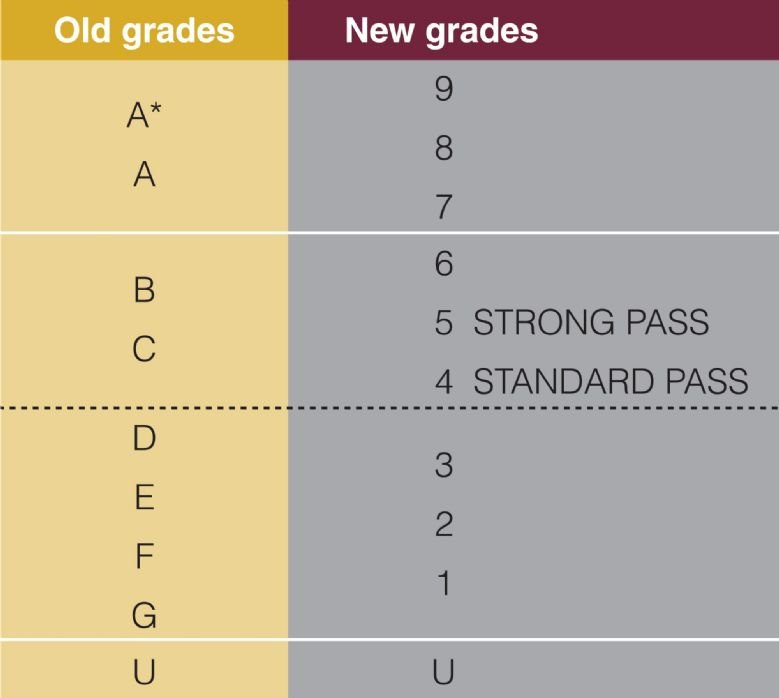
The British curriculum uses a 9 – 1 grading scale for marking and the making of IGCSE results. 9 is the highest, and one is the lowest. A-Level results are graded A* to E. This grading offers a clear distinction of achievement levels. Check out this blog to learn in depth about the IGCSE grading system.
Benefits of studying the British Curriculum:
The main benefits of studying the British curriculum are its global recognition and acceptance, which provide advantages in higher education and job markets. It offers a structured, yet flexible, approach that emphasizes critical thinking, problem-solving, and holistic development. This curriculum also fosters leadership, global awareness, and practical skills through a blend of academic rigor and real-world application.
- Global recognition: The leading universities worldwide accept GCSEs and A levels. It is considered a passport to the world’s top universities.
- Structured but Flexible: Offers a structured learning of core subjects, along with flexibility to choose a career path with optional subjects.
- Focus on critical thinking: This curriculum focuses on building critical thinking and problem-solving skills.
- Holistic development: Beyond academics, it focuses on extracurricular activities, physical education, and builds leadership and teamwork qualities.
- Practical application: This teaches concepts through practical applications for subjects that require them, like Chemistry, Physics, and Biology.
- Transferability: The British curriculum is highly consistent all around the world, providing flexibility for students to transfer or change their schools without disrupting their learning process.
- Broad-based education: This curriculum not only focuses on academics but also includes skill-building during this process. It nurtures students and does their personal development too.
Challenge of the British Curriculum:
This curriculum also faces some challenges that are listed below, along with their solutions:
- Exam-centric approach: Continuous exams increase stress and exam overload in students. This affects the psychological well-being of students. Some students like testing their learning, while others are scared and run away from the concepts of exams, killing their creativity.
Schools should focus on conducting extracurricular activities and providing opportunities to showcase their creativity.
- Limited focus on a Global perspective: People think that this curriculum limits students’ views on global perspectives. It is rigorous and lacks emphasis on international issues.
However, the implementation of additional subjects and extracurricular activities can be helpful for students.
- Lack of holistic development: Because of strong and continuous assessments, a fully holistic development is lacking. Particularly regarding social-emotional learning and the development of skills beyond academic achievement.
Studying in the top schools caters to this problem, offering a well-rounded education leading to student-led initiatives and learning through innovative resources.
Transform learning the British curriculum with VACE Global:
At VACE Global, we empower students to master the British curriculum through expert guidance and a results-driven approach. Our experienced faculty helps learners excel in subjects across IGCSE and A Levels, while our personalized programs prepare them for success in SATs and university admissions. With access to merit-based scholarships, interactive lessons, and continuous academic support, students gain the confidence to perform at their best. Take the next step toward academic excellence, enroll now at VACE Global, and unlock your full potential.
FAQs:
- What is the difference between the IGCSE and the British curriculum?
The IGCSE and GCSE are very similar to each other and are typically accepted as equivalent at most universities. The primary difference between the two is that the GCSE is designed primarily for British students, whereas the IGCSE is designed for international students.
- What is another name for the British curriculum?
National Curriculum for England
- Is IGCSE accepted in Pakistan?
IGCSE is an internationally recognized qualification for students aged 14-16. It is based on the British education system and is offered in many countries, including Pakistan. IGCSEs are flexible and focus on developing a student’s critical thinking, problem-solving, and practical skills.
- Which curriculum is better, American or British?
The British Curriculum is designed to provide depth and focus in core academic areas while encouraging a well-rounded education, ensuring depth in key areas. In contrast, the American system allows students to explore electives such as arts and technology, offering a broad scope of study
- Is British better than CBSE?
If your child thrives in a structured exam-based system, CBSE might work well. But if they do better with ongoing assessment and coursework, the British Curriculum could be a better fit.
- Where is the British curriculum accepted?
The British curriculum (IGCSE and A Levels) is recognized by leading universities and employers worldwide, including the UK, Europe, Asia, the Middle East, and the Americas, making it a strong foundation for global education pathways.
- Are A Levels equivalent to AP courses in the American system?
Yes, A Levels and Advanced Placement (AP) courses both prepare students for university-level study, but A Levels offer deeper specialization in fewer subjects, while APs allow students to explore a broader range of topics.