
The willingness to bring new strategies and methods of teaching into learning is a quality of the best teacher. Traditional teaching is slowly and gradually being replaced by modern techniques. The psychology of students today has evolved, and they do not participate in simple rote learning processes. Their minds have changed and adjusted to modern technology and its ways, and they need more effort in order to learn as compared to previous generations.
Some methods of teaching go along well with a specific O-level subject. For example, the flash-card method of teaching works well with the O-level mathematics as well as Further Maths, for learning and memorizing formulas. The brainstorming method works well for theoretical subjects that have connectivity in them, like A-level physics, A-level sociology, and ICT. Subjects like O-level Islamiyat and Pakistan studies can be learned through notes and short quizzes.
This blog is a useful piece for teachers, students, and parents who homeschool their children. These modern methods of teaching can help you make the learning process active yet fun and engaging, increasing the retention span of children. For more content related to A-level subjects, learning techniques, topic-based content, and general student queries in Pakistan, the UAE, or any international location, stay in touch with VACE Global and its latest updates.
What are the methods of teaching?
Methods of teaching refer to the systematic approaches, techniques, and strategies that teachers use to help students understand new ideas, concepts, and skills. The choice of teaching method often depends on the subject, learning objectives, and the students’ needs. Common teaching methods include lecture-based learning, where the teacher explains topics directly; discussion-based learning, which encourages critical thinking and participation; project-based learning, where students learn by doing; and inquiry-based learning, which promotes curiosity and problem-solving.
Modern education also integrates technology-enhanced methods, such as digital classrooms at learning management systems, interactive simulations, and online learning platforms, making lessons more engaging and accessible. By using a blend of traditional and innovative methods, teachers can cater to different learning styles, visual, auditory, and kinesthetic, ensuring that every student benefits from the lesson.
Importance of effective methods of teaching:
Effective methods of teaching are essential for improving student learning outcomes and creating a meaningful educational experience. Here’s why they matter:
- Enhance Understanding: Help students grasp complex ideas and concepts more easily.
- Increase Engagement: Make lessons interactive and enjoyable, keeping students motivated to learn.
- Encourage Critical Thinking: Promote curiosity, problem-solving, and independent thought.
- Cater to Different Learning Styles: Address visual, auditory, and kinesthetic learners through varied approaches.
- Build Confidence: Encourage participation and boost students’ self-esteem as they succeed in learning tasks.
- Improve Retention: Help students remember and apply what they learn in real-life situations.
- Foster a Positive Learning Environment: Create an atmosphere of support, collaboration, and respect.
- Identify Student Needs: Allow teachers to assess progress and adjust strategies for better results.
- Develop Lifelong Skills: Prepare students for future academic, personal, and professional success.
The 5 best methods of teaching:
There are a large number of methods of teaching, both traditional and innovative. But the top 5 of them are:
- Game-based learning:
Best for: Children of all age groups
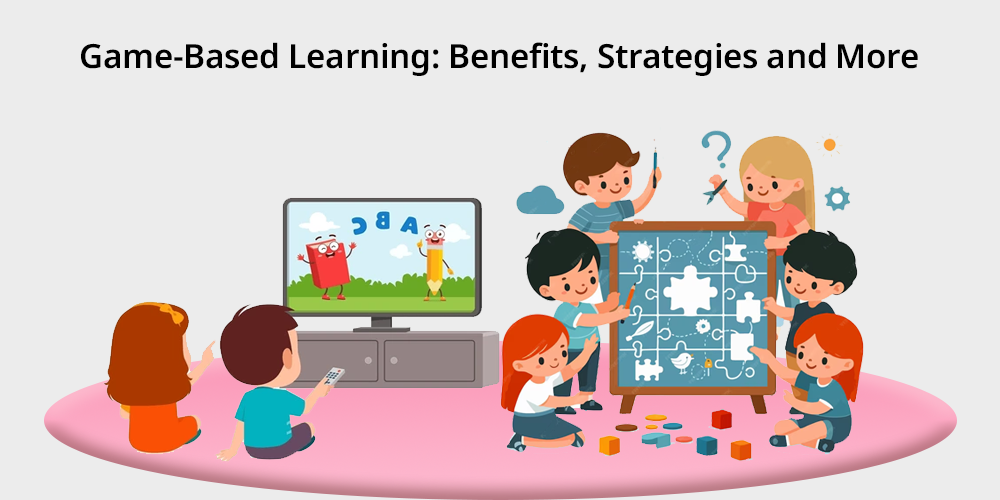
Game-based learning is a modern teaching approach that incorporates gaming elements into educational activities. Instead of relying on traditional classroom methods, it uses game mechanics—such as points, levels, and rewards—to capture students’ interest and make learning more dynamic and enjoyable. This strategy leverages children’s natural enthusiasm for play, transforming lessons into exciting, goal-driven experiences.
Advantages: Boosts student engagement, makes lessons enjoyable, and enhances knowledge retention.
Disadvantages: Can lead to excessive screen exposure and may not be effective for every subject area.
Example: SplashLearn is a great example of game-based learning in practice. It features a wide variety of interactive math and reading games designed for students from pre-kindergarten to grade 5. By turning challenging academic concepts into playful tasks, SplashLearn helps children enjoy learning while strengthening their understanding and memory, demonstrating how powerful game-based teaching can be.
- Student-centered approaches:

Best for: Middle School and High School Students (Ages 12–18)
Student-centered learning is an educational approach that places students at the heart of the learning process. Instead of the teacher directing every step, students take an active role in exploring topics, solving problems, and constructing their own understanding, while teachers serve as guides or facilitators. Lessons are often customized to align with students’ interests, abilities, and goals, encouraging ownership of their education and a stronger connection to what they learn.
Advantages: Promotes critical thinking, nurtures independence, and supports diverse learning styles.
Disadvantages: Can be harder to manage in large classrooms and typically requires extra planning and preparation.
Example: A common example of student-centered learning is group projects where learners select their own topics, design their own presentations, and collaborate to explore ideas creatively.
- Project-based learning:

Best for: Middle School, High School, and College Students (Ages 12–22)
Project-Based Learning (PBL) is a dynamic teaching approach that allows students to learn through hands-on, real-world projects. Instead of relying solely on lectures or rote memorization, learners are presented with a problem or challenge and encouraged to explore solutions through research, teamwork, and creativity. This method connects academic knowledge to practical application, making learning both meaningful and engaging.
Advantages: Promotes a deeper understanding of concepts, strengthens collaboration skills, and enables students to apply classroom knowledge in real-life contexts.
Disadvantages: Demands extensive preparation and time management from both teachers and students.
Example: A typical example of PBL is when students work together to design a sustainable city, integrating ideas from science, mathematics, and social studies to create innovative and environmentally responsible solutions.
- Collaborative-learning strategies:

Best for: All Age Groups, Especially Middle School, High School, and College Students (Ages 12–22)
Collaborative Learning Strategies focus on harnessing the power of teamwork in education. This approach encourages students to work together in groups, combining their individual strengths, skills, and knowledge to achieve common learning goals. Rooted in the idea that collective effort promotes richer understanding, collaborative learning helps students learn not just from the teacher but also from one another through discussion, debate, and shared problem-solving.
Advantages: Builds teamwork and communication skills, promotes peer learning, and exposes students to diverse viewpoints and problem-solving approaches.
Disadvantages: Can be difficult to coordinate effectively, and evaluating individual contributions may pose challenges.
Example: A typical collaborative learning activity might involve students forming groups to develop a presentation on a chosen topic, dividing tasks, sharing insights, and merging their findings into a unified final project.
- Inquiry-based learning:
Best for: Middle School, High School, and College Students (Ages 12–22)
Inquiry-Based Learning is an instructional approach that empowers students to take charge of their own learning. Rather than passively receiving information, learners are encouraged to ask meaningful questions, investigate problems, and explore concepts through observation and research. This approach transforms the classroom into an environment of exploration and curiosity, where students actively construct knowledge instead of simply absorbing it.
Advantages: Develops critical thinking, sparks curiosity, and enhances independent research and problem-solving skills.
Disadvantages: Requires careful planning and may be challenging for teachers to facilitate without providing too much direction.
Example: Instead of explaining a concept like gravity through a lecture, the teacher might ask, “Why do apples fall from trees?”, encouraging students to observe, hypothesize, and ultimately uncover the scientific principle themselves.
Other commonly used methods:
- Problem-based learning:
Best for: High School and College Students (Ages 15–22)
Problem-Based Learning (PBL) is a student-centered teaching approach that focuses on engaging learners with real-world challenges. Rather than relying on traditional lectures, this method encourages students to apply critical thinking, teamwork, and research skills to analyze and solve complex issues. It bridges the gap between theory and practice, helping students see the real-life relevance of what they learn in the classroom.
Advantages: Strengthens problem-solving abilities, connects learning to real-world situations, and promotes collaboration among students.
Disadvantages: Requires carefully designed, well-structured problems and can be time-intensive for both teachers and students.
Example: A class might be presented with an environmental challenge—such as reducing plastic waste—and asked to develop innovative, sustainable solutions through research and group discussions.
- Flipped classroom model:
Best for: High School and College Students (Ages 15–22)
The Flipped Classroom Model is an innovative approach to teaching that reverses the traditional learning process. In this model, students are introduced to new concepts at home—through video lessons, readings, or online materials—while class time is devoted to applying that knowledge through discussions, problem-solving, and hands-on activities. This method transforms the classroom into an interactive learning environment where students can clarify doubts, collaborate, and engage more deeply with the subject matter.
Advantages: Encourages active participation, supports self-paced learning, and allows teachers to focus on higher-level understanding during class.
Disadvantages: It depends on students’ commitment to complete pre-class work and requires reliable access to digital resources.
Example: Students might watch a video lecture on a historical event at home and then, during class, engage in debates or reenactments to analyze the causes and outcomes of that event more critically.
- Social Emotional learning:
Best for: All Age Groups, Especially Elementary and Middle School Students (Ages 6–14)
Social Emotional Learning (SEL) is an educational approach that helps students develop essential life skills such as emotional awareness, empathy, relationship-building, and responsible decision-making. Rather than being a single teaching technique, SEL is a holistic framework that weaves social and emotional growth into daily classroom activities. It encourages students to understand themselves and others, manage emotions effectively, and make thoughtful choices that contribute to both personal and community well-being.
Advantages: Builds emotional intelligence, strengthens communication and empathy, and nurtures a supportive and positive classroom culture.
Disadvantages: Can be difficult to integrate seamlessly into academic lessons and requires ongoing effort and reinforcement from educators.
Benefits of Using Modern Methods of Teaching
Modern methods of teaching have transformed the way students learn and teachers deliver knowledge. Unlike traditional approaches that rely heavily on rote memorization and one-way communication, modern methods focus on interaction, engagement, and critical thinking. These approaches make learning more enjoyable, personalized, and relevant to real-world scenarios.
Key benefits include:
- Enhanced Engagement: Students stay motivated and interested through interactive and hands-on learning experiences.
- Better Understanding and Retention: Modern methods emphasize conceptual learning over memorization, helping students retain information longer and helps in building easier revision strategies.
- Development of Critical Skills: Learners gain essential skills like communication, problem-solving, creativity, and collaboration.
- Adaptability: Modern teaching tools and strategies can be tailored to suit different learning styles and abilities.
- Real-World Application: Students connect theory with practice, preparing them for future academic and professional success.
Overall, modern teaching methods create a dynamic and inclusive learning environment that helps students reach their full potential. This has also positively affected the psychological well-being of students.
The difference between teaching methods and teaching strategies:
While the terms teaching methods and teaching strategies are often used interchangeably, they refer to two distinct aspects of the teaching process.
- Teaching Methods are the broad frameworks or models teachers use to deliver lessons, such as project-based learning, inquiry-based learning, or collaborative learning. These methods define how knowledge is taught and structured.
- Teaching Strategies, on the other hand, are the specific techniques or actions teachers use within those methods to achieve learning objectives, such as using quizzes, group discussions, storytelling, visual aids, or peer assessment.
In simpler terms, the teaching method is the overall approach, while the strategy is the practical step taken to make that approach effective. Both are crucial for successful instruction and go hand in hand in creating meaningful learning experiences. You require both in balanced portions, especially during the exam overload season, or if you wish to extend your O-levels over three years.
Conclusion:
Modern teaching methods are reshaping education by making classrooms more interactive, inclusive, and student-centered. These innovative approaches not only help students grasp concepts more effectively but also prepare them with skills essential for success in the modern world, such as collaboration, problem-solving, and creativity.
At VACE Global, we implement these modern methods of teaching to create impactful learning experiences for O Level and A Level students. With an expert faculty, merit-based scholarship programs, and a range of short courses, VACE Global ensures quality education that adapts to every student’s learning style and goals. Our interactive approach bridges academic concepts with real-world understanding, helping learners achieve excellence both in exams and beyond.
Enroll now to experience the future of education and unlock your academic potential with VACE Global.
FAQs:
1. Why are modern teaching methods important?
Modern teaching methods focus on student engagement, creativity, and practical understanding, helping learners develop critical thinking and problem-solving skills.
2. How do modern methods differ from traditional ones?
Traditional teaching emphasizes lectures and memorization, while modern methods promote participation, collaboration, and real-world learning.
3. Which modern teaching method is the most effective?
There isn’t one universal method — effectiveness depends on the subject, learning goals, and student needs. Commonly effective ones include project-based, inquiry-based, and collaborative learning.
4. Can modern teaching methods be used for all age groups?
Yes. These methods can be adapted for any age, from early childhood to higher education, by adjusting complexity and learning activities.
5. How does VACE Global apply modern teaching methods?
VACE Global combines expert-led instruction, interactive learning tools, and a personalized approach to make education engaging and result-driven. Students also benefit from scholarships, short courses, and easy enrollment options designed for their success.