
What are accounting concepts?
Accounting concepts are the fundamental ideas that professionals in the accounting, economics, and finance industries use to assist individuals. These accounting concepts are designed to help individuals, organisations, and businesses record their financial transactions.
The accountants use these accounting concepts to prepare financial reports for organisations and businesses, and individuals. People can benefit from understanding accounting ideas because it can help them save money, avoid debt, maintain proper financial records, and make more informed financial decisions. Accountants use accounting concepts to understand and explain a company’s operations, cash flows, and financial performance. Knowing the basic accounting concepts is important for students who choose accounting in their O-level or A-level subjects.
The blog is helpful for students seeking help in understanding the basic accounting concepts to start their career in Accounting and finance.
The basic accounting concepts:
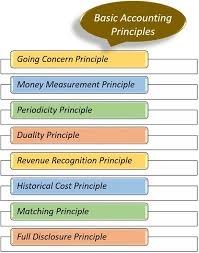
These basic accounting concepts are the basis of any decisions made by accountants regarding the financial situation of any business are organisation:
- Business entity concept:
The business entity concept (also called the economic entity or separate entity concept) emphasizes that a business and its owner are two different identities. This means that personal transactions of the owner—such as personal expenses, assets, income, or debts—cannot be mixed with business records.
Why it matters:
- Ensures clarity when tracking income, expenses, and tax deductions.
- Protects the owner’s personal finances and credit standing.
- Helps stakeholders assess company performance independently from the owner’s wealth.
Example: If the owner buys groceries for home, that expense cannot be recorded in the business accounts.
- Going concern concept:
The going concern concept assumes that a business will continue operating into the foreseeable future, at least 12 months from the reporting date. This allows financial records such as balance sheets, income statements, and bookkeeping to be maintained on a long-term basis.
When this assumption fails:
A company cannot apply this concept if it is facing consistent losses, cash flow problems, inability to pay debts, refusal of credit by banks, inability to distribute dividends, or ongoing lawsuits.
Example: A bakery records the cost of its ovens as long-term assets because it assumes the business will keep running for years.
- Money measurement concept:
According to the money measurement concept, only transactions that can be expressed in monetary terms should be recorded in financial statements. Factors such as employee skills, product quality, or customer sentiment, while important, cannot be included because they lack direct monetary value.
Example: A company can record a machine bought for $10,000, but cannot record the skill level of the employees who operate it.
- Accounting period concept:
The accounting period concept defines the time frame for preparing financial reports. Businesses may prepare statements monthly, quarterly, or half-yearly for internal use, while annual reports are typically created for external stakeholders like investors, tax authorities, and regulators.
Example: A company publishes a financial report for January–December (12 months) to show performance to investors.
- Accrual concept:
The accrual concept requires businesses to record transactions at the time they occur, not when cash is actually received or paid. This approach ensures accurate tracking of income, expenses, assets, and liabilities, providing a realistic view of financial performance.
Example: A company sells goods worth $5,000 on credit. Even though the payment will arrive later, the $5,000 is recorded as income immediately.
- Revenue realisation concept:
Also known as the revenue recognition concept, this principle states that revenue should be recorded once it is earned, even if payment has not yet been received. For example, when a product is sold, the seller records it as revenue and creates a receivable entry against the buyer until payment is collected.
Example: When a software company sells an annual subscription, it records revenue as the service is delivered each month, not all at once.
- Full disclosure concept:
The full disclosure concept requires companies to present all necessary financial information to relevant parties, such as investors, creditors, shareholders, and tax authorities. This includes details on revenues, liabilities, depreciation, leases, taxes, and stock valuation, ensuring transparency and compliance.
Example: A company must disclose its loans and pending tax obligations in financial reports, even if the amounts are small.
- Dual aspect concept:
The dual aspect concept forms the foundation of double-entry bookkeeping. It states that every transaction affects two accounts, one debit and one credit. For example, buying equipment decreases cash (credit) but increases assets (debit). This ensures balance and accuracy in financial records.
Example: If a business buys furniture for $2,000 in cash, it records an increase in assets (furniture) and a decrease in cash (credit).
- Materiality concept:
The materiality concept helps determine whether specific financial information should be included in reports. If excluding an item could mislead stakeholders or change their decisions, it is considered material and must be disclosed. Larger companies may ignore small, immaterial transactions, while smaller firms may treat them differently.
Example: A small stationery expense of $50 may be ignored in a billion-dollar company, but would be significant for a small startup.
- Verifiable Objective evidence cost:
This principle highlights the need for objective, verifiable proof of financial transactions. Receipts, invoices, and contracts serve as evidence to ensure reliability. Without proper documentation, financial records risk being biased, misleading, or inaccurate.
Example: A business must keep an invoice for office furniture purchased; otherwise, the transaction cannot be considered valid.
- Historical cost concept:
The historical cost concept states that assets should be recorded at their original purchase price rather than their current market value. This avoids frequent revaluations and provides consistency and reliability in financial reporting.
Example: If a company bought land for $100,000 in 2010, it will still be recorded as $100,000 in the books, even if its market value rises to $500,000.
Accounting concept vs Accounting principle:
Accounting concepts and accounting principles are both important as they build a foundational pillar for discussion and understanding of financial transactions, rules, documents, and theories. There are some differences between these terms.
- Accounting principles are the laws or standards for accounting professionals to follow, and these include rules and regulations when creating financial documents.
- Whereas the accounting concepts are what accountants usually do. The principles describe how they should do it.
For example, an accountant should follow certain accounting procedures, which are the accounting principles, to make a financial report or a budget, which is an accounting concept.
Basic Accounting terms used:
There are a few basic terms that are the main components of accounting. Any student cannot understand accounting without understanding these terminologies. Below are the pillars of accounting:
- Revenue:
For any business, revenue refers to the total money earned from selling products or providing services. In other words, it represents the company’s gross income before any expenses are deducted. Revenue is calculated by adding up all earnings, equity gains, and interest generated during a given reporting period. Once taxes and operating expenses are subtracted from this revenue, the remaining amount reflects the company’s profit.
- Expenses:
Expenses are the costs a business must cover in order to generate revenue. These may include rent, supplies and materials, employee salaries, advertising, repairs, and taxes. For instance, a restaurant manager regularly buys ingredients from a supplier to keep the business running. Ultimately, a company’s goal is to ensure that its expenses remain lower than its revenue so it can earn a profit.
- Assets:
Assets are resources owned by a business that provide future economic benefits. They can be calculated by adding a company’s liabilities to its equity. Assets are generally divided into two categories:
- Current assets: Short-term resources that can be used or converted into cash within a year, such as cash, checks, accounts receivable, inventory, and prepaid expenses.
- Non-current (fixed) assets: Long-term resources that benefit the business for more than a year, including land, buildings, equipment, stocks and bonds, and intangible assets like trademarks.
- Liabilities:
Liabilities are the financial obligations of a business, essentially, what the company owes to outside parties such as lenders or creditors. Like assets, liabilities are divided into two main types:
- Current liabilities: Short-term obligations that must be paid within a year, such as accounts payable, short-term loans, installments of long-term loans, and tax dues.
- Non-current liabilities: Long-term obligations not due within the next year, including mortgages, long-term bonds, and deferred tax payments.
- Capital:
Capital refers to anything that provides value or benefits to a business, such as assets, machinery, property, inventory, or even patents. While cash is one form of capital, the term usually describes investments that help generate long-term wealth for the business. Capital can be categorized into different types:
- Working Capital: Calculated by subtracting current liabilities from current assets, working capital represents the funds available for day-to-day operations. It includes liquid resources like cash that businesses use to cover short-term obligations such as accounts payable and debt repayments due within the year.
- Equity Capital: This is the ownership stake shareholders hold in a company, often represented by shares. If a business liquidates its assets to pay off debts, the amount left for shareholders reflects their equity.
- Debt Capital: Businesses can raise debt capital by borrowing money through loans or bonds from banks, private investors, or government institutions. Although it involves repayment, debt capital gives businesses access to large funds they can use to expand and grow.
- Accounts:
An account represents a specific type of financial transaction, such as cash, sales, or expenses. Businesses record these accounts in a general ledger, an organized accounting book that tracks and categorizes all transactions.
Two important types of accounts include:
- Accounts Receivable: The money customers owe a business for goods or services they’ve purchased on credit.
- Accounts Payable: The money a business owes to suppliers or creditors for goods and services it has received.
- Financial statements:
Financial statements are formal documents that summarize the financial activities of a business (or individual). They provide a clear picture of performance, financial position, and cash movement over a specific period. The main types include:
- Income Statement: Also known as a profit and loss (P&L) statement, it shows a company’s financial performance by detailing revenues, expenses, and profits (or losses) over a reporting period.
- Balance Sheet: A snapshot of a company’s financial position, listing its assets, liabilities, and equity at a specific point in time.
- Statement of Cash Flows: A report that tracks how much cash a business generated and spent during a given period, highlighting operating, investing, and financing activities.
Are accounting concepts hard?
Accounting is definitely not one of the easiest A-level subjects. It requires consistent practice, a structured study schedule, revision strategies, and the ability to apply concepts rather than just memorize them. Many students struggle because accounting combines both theory (understanding concepts like accrual, materiality, and going concern) and practical application (solving problems and preparing statements).
However, the level of difficulty often depends on the student’s interest and approach. Students who enjoy working with numbers, logic, and problem-solving tend to find accounting much easier. On the other hand, those who rely solely on rote learning without practicing may find it more challenging. In short, the more engaged and interested you are, the less difficult accounting concepts will feel.
How to remember accounting concepts?
Remembering accounting concepts becomes easier if you use the right strategies:
- Use real-life examples: Relating concepts to real-world business activities (like buying equipment or taking a loan) makes them easier to understand.
- Create flashcards: Write one concept on one side and its definition/example on the other to quickly revise.
- Practice past papers: Applying concepts in exam-style questions helps reinforce memory.
- Teach someone else: Explaining a concept to a friend or study partner strengthens your understanding.
- Use mnemonics or acronyms: For example, to remember the accounting equation, think A = L + E (Assets = Liabilities + Equity).
Conclusion:
Accounting concepts form the foundation of financial understanding. While they may seem tricky at first, consistent study, practical application, and effective revision strategies can make them much easier to grasp. With the right mindset and interest, mastering accounting becomes less of a challenge and more of a rewarding skill that benefits both academically and professionally.
At VACE Global, we specialize in guiding O/A Level students through subjects like Accounting with expert tutors, structured study plans, and exam-focused strategies. If you want to simplify complex accounting concepts, boost your grades, and study with confidence, enroll with VACE Global today and start your journey toward success.
FAQ
Q1. Is accounting harder than economics at A-level?
It depends on the student’s strengths. Accounting is more calculation- and principle-based, while economics involves more theory and analysis.
Q2. How long does it take to understand basic accounting concepts?
With regular practice, most students can get a strong grasp of the basics within a few weeks.
Q3. Do I need to be good at math to study accounting?
Not necessarily. Accounting requires logical thinking and attention to detail rather than advanced mathematics.
Q4. What’s the best way to study accounting for exams?
Follow a study schedule, revise concepts regularly, and practice plenty of past papers to strengthen both theory and application.
Q5. Can accounting concepts be learned without coaching?
Yes, with self-study and discipline, students can learn accounting concepts. However, guidance from a tutor or expert can make learning faster and clearer.