
Over the years, the global climate has undergone drastic changes, significantly impacting everyday life. The climatic conditions of Pakistan have changed drastically over the past few years, affecting every individual and operations within the country. Pakistan is one of the world’s most climate-vulnerable countries, experiencing dramatic shifts in temperature, rainfall, and weather patterns over the past few decades. Despite contributing less than 1% to global greenhouse gas emissions, Pakistan is disproportionately affected by the consequences of climate change.
Studying the climatic conditions of Pakistan is a key topic in the O-level Pakistan Studies syllabus. This area is frequently tested and quizzed in the O-level exams.
These changing climatic conditions of Pakistan now pose serious risks to crops, water resources, human health, infrastructure, and long-term economic stability, making it a topic of both national and global concern.
This blog will deeply dive into the effects of changing climatic conditions and will help you grasp this concept very easily. For further learning about the features of Pakistan, connect with VACE Global.
Key Takeaway:
- Pakistan is one of the world’s most climate-vulnerable countries, facing intense shifts in temperature, rainfall, and extreme weather despite contributing less than 1% to global emissions.
- The climatic conditions of Pakistan are changing rapidly, affecting agriculture, water resources, health, economy, and long-term sustainability.
- Temperature rise, glacier melt, unpredictable monsoons, drought, floods, and smog are now shaping livelihoods across different provinces in different ways.
- Future climate projections indicate severe warming, water stress, and increased disasters, demanding urgent adaptation and climate-resilient policies.
- Understanding the changing climatic conditions of Pakistan is essential for O-Level students and citizens, as it connects environmental science, national challenges, and future planning.
The climatic conditions of Pakistan:
According to the books of Pakistan studies, the significant location of Pakistan experiences four major climatic conditions of Pakistan, shaped by its diverse geography, seasonal wind systems, and varying temperature patterns.
- Cold Climate (Northern Highlands): The northern mountainous regions, including Gilgit-Baltistan, Chitral, Swat, and Kaghan, experience prolonged winters with heavy snowfall and short, mild summers. Altitude is the dominant factor here, with temperatures dropping below –10°C in winter and rising to 20–25°C in summer. This region feeds the Indus River system through melting glaciers.
- Hot Desert Climate (South west and Thar region): Areas such as Thar, Cholistan, and parts of Balochistan fall under the hot desert climate. Summers are extremely hot and dry, reaching 45–50°C, with minimal rainfall. Vegetation is sparse, and water scarcity is a persistent concern, affecting agriculture, livestock, and livelihoods.
- Topical/ Subtropical climate (Plain of Punjab and Sindh): Central and southern plains experience long, hot summers and short winters. Monsoon winds bring rainfall between July–September, which is crucial for agriculture. Temperatures can exceed 40°C in summer, while winters remain relatively mild, ranging from 5 to –15°C.
- Arid Mountain climate (western and northwestern Balochistan): These regions are dry, windy, and cold due to high altitude and significant distance from moisture sources. Rainfall is scarce throughout the year, and temperature swings between day and night are steep.
What Do We Mean by Change of Climatic Conditions of Pakistan?
The climate of Pakistan hasn’t been the same for a long time. Over the past years, every climatic zone has experienced harsh weather conditions affecting lifestyle, livestock, and livelihood negatively.
Climate change refers to long-term alterations in temperature, precipitation patterns, and weather extremes across regions. Unlike weather, which changes daily, climate trends unfold over decades. Due to increased greenhouse gases like carbon dioxide, methane, and nitrous oxide, the global climate system is warming, intensifying extreme events such as droughts, floods, heatwaves, and storms
Historical Climate Trends in Pakistan:
According to a study, Pakistan is ranked among the top 10 countries affected by climate change and natural disasters.
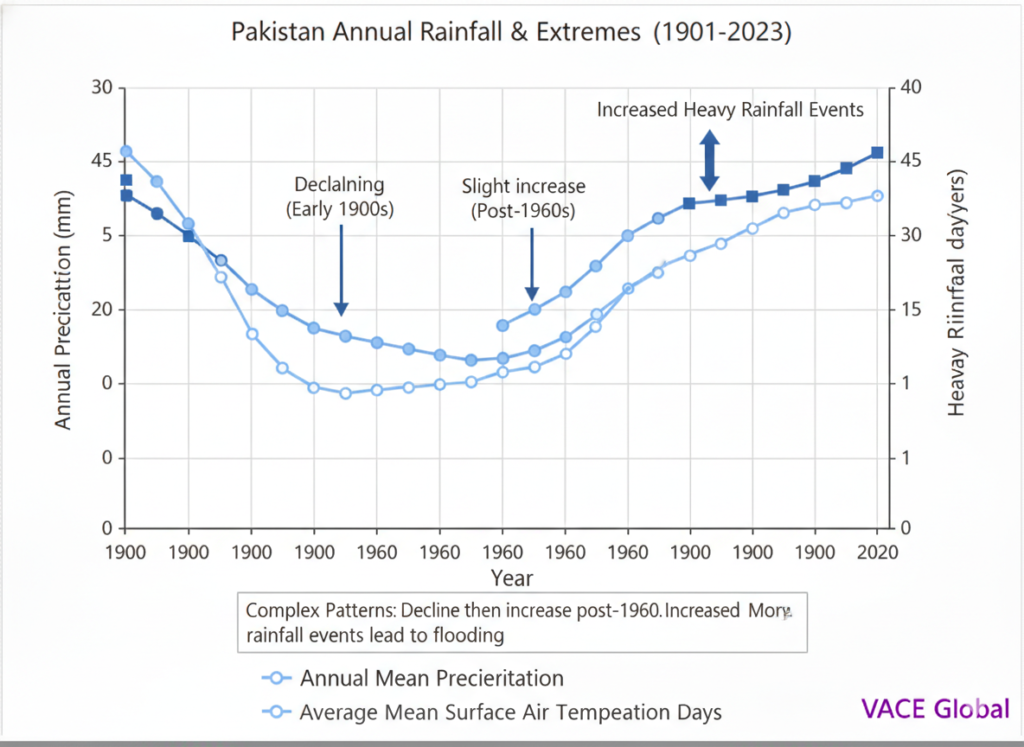
The climate trend changed over time with bringing significant effects in:
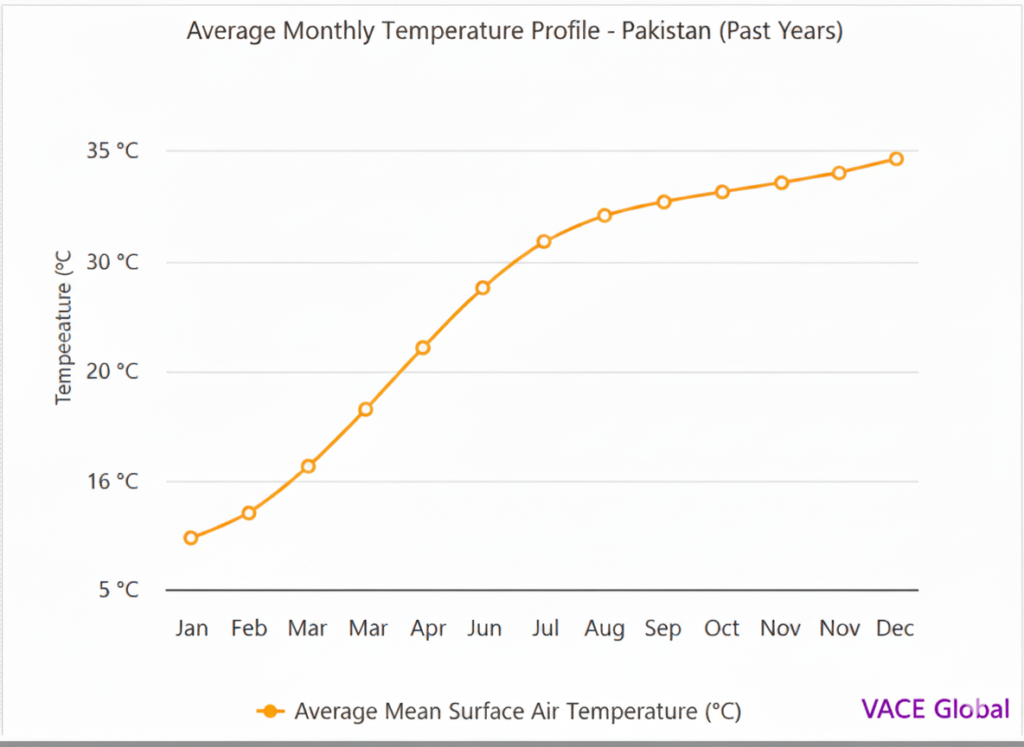
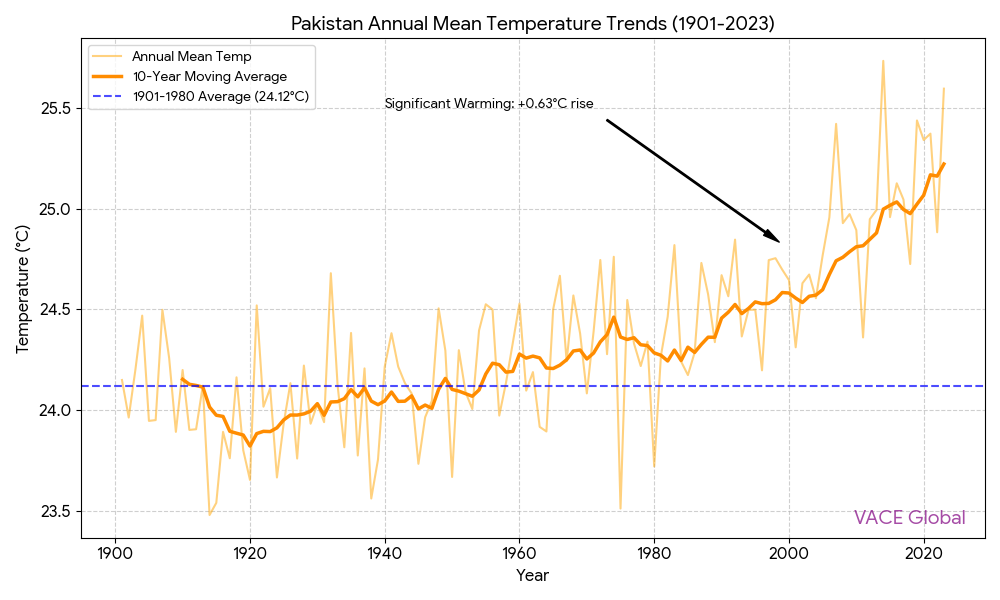
- The Temperature has risen by around 0.63 degrees per century
- The sea level has been observed rising by 3.6mm/year, especially from 2006 to 2015.
- Monsoon patterns have shifted, becoming unpredictable and uneven.
- Glaciers in the Himalayas, Karakoram & Hindu Kush are retreating, altering river flow.
- Floods have increased, notably in 2010 and 2022.
- Urban air pollution and smog have worsened in Punjab’s major cities.
- Drought-prone regions like Thar & Balochistan are experiencing extended dry spells.
These changes are now directly shaping the country’s agriculture, health outcomes, water availability, and socio-economic stability.
Major Effects of Changing Climatic Conditions of Pakistan:
The climatic conditions of Pakistan have undergone significant changes over recent decades, leading to shifts in rainfall patterns, temperature rise, and more frequent extreme weather events. These climate shifts are no longer isolated incidents—they are now influencing agriculture, water resources, health, and economic stability across the country. As Pakistan faces intensifying heatwaves, unpredictable monsoon seasons, and glacier melt in the north, the impact on daily life and national development has become increasingly visible. Understanding these major effects is essential for grasping how the climatic conditions of Pakistan are evolving and what it means for the country’s future.
1. Impact on Agriculture & Food Security
Agriculture is the backbone of Pakistan’s economy, employing a large portion of the population. Climate stress directly affects:
- Crop output (wheat, rice, cotton, sugarcane, mangoes)
- Growing seasons and sowing calendars
- Soil fertility and irrigation demands
- Pest and disease outbreaks (warmer climates increase pest survival)
Reduced agricultural productivity threatens food security, rural livelihoods, and export earnings, creating potential price inflation during shortages
2. Water Resources & Hydrology Stress
Pakistan’s rivers rely heavily on glacier melt and monsoon rains, both of which are being disrupted.
Key impacts include:
- Seasonal water imbalance (flooding in monsoon, scarcity in dry seasons)
- Declining per capita water availability
- Urban water shortages in Karachi, Quetta, and Lahore
- Increased groundwater depletion
- Threat to hydropower generation
The paradox of simultaneous floods and droughts is now becoming a defining challenge.
3. Human Health & Public Safety Risks
Changing climatic conditions of Pakistan create both direct and indirect health hazards:
- Heatwaves can trigger heatstroke, dehydration, and cardiac complications.
- Vector-borne diseases like dengue and malaria spread faster in warmer, wetter climates.
- Water-borne diseases spike during floods (diarrhea, cholera, infections).
- Smog and air pollution in cities lead to respiratory and vision problems.
- Mental health stress increases during disasters and displacement.
Pakistan’s healthcare infrastructure is already strained, making climate-linked health emergencies more difficult to manage.
4. Economic & Poverty Impacts
Climate disasters have financial consequences that extend across generations.
Key economic impacts include:
- Damage to roads, bridges, homes, and electrical grids
- Job losses and reduced household income
- Lower productivity in heatwave months
- Rural migration toward cities (climate-driven displacement)
- Pressure on government disaster relief funds
Floods are especially costly; the 2022 floods alone caused billions in damage and affected millions of people nationwide.
5. Environmental & Ecosystem Degradation
Climate changes disrupt natural systems and wildlife habitats:
- Deforestation speeds up land degradation
- Mangrove forests along Sindh’s coast decline
- Marine species face heat stress in coastal waters
- Birds and mammals migrate or face extinction risks
- Coral and aquatic ecosystems suffer from warming trends
Loss of biodiversity weakens ecosystems that humans depend on for food, clean water, and stability.
6. Urban Climate Challenges
Cities experience climate change in unique ways:
- Heat island effect: Urban structures trap heat (Karachi & Lahore are prime examples).
- Smog season in Punjab: Air quality worsens every winter due to industrial and vehicle emissions.
- Drainage and flooding issues: Poor infrastructure cannot handle heavy rain.
- Waste mismanagement exacerbates water contamination and vector-borne diseases.
Urban climate resilience has become an urgent policy need.
7. Rise in Extreme Weather Events
Pakistan has seen a dramatic increase in extreme weather, including:
- Floods (2010, 2022 mega floods)
- Prolonged droughts in Balochistan & Thar
- Deadly heatwaves (Karachi 2015)
- Cyclones & sea intrusion in Sindh’s coastal belt
These events displace communities, disrupt schooling, damage agriculture, and undermine economic growth.
Regional Variation of Climate Impacts
The climatic conditions of Pakistan do not affect every region in the same way. Due to its diverse geography, from northern mountains to southern coasts, each province faces unique climate-related challenges. Understanding these regional differences is essential for targeted adaptation strategies, disaster preparedness, and sustainable development planning.
- Punjab: The plains of Punjab experience rising heatwaves, smog, and crop stress due to unpredictable rainfall and increasing temperatures. Urban centers like Lahore and Faisalabad are particularly affected by air pollution and urban heat islands
- Sindh: Coastal areas of Sindh, including Karachi and Thatta, are vulnerable to coastal flooding, water scarcity, and occasional cyclones. Rising sea levels and saltwater intrusion threaten agriculture and freshwater resources.
- Balochistan: The arid and semi-arid regions of Balochistan face drought, desertification, and water shortages, putting stress on agriculture, livestock, and local communities.
- KPK & GB: The northern mountainous areas are highly sensitive to glacier melt, flash floods, and landslides, which can damage infrastructure and disrupt local livelihoods.
- Coastal belts: Pakistan’s southern coastal belt is under threat from sea-level rise and saltwater intrusion, affecting fishing communities, mangrove forests, and agricultural lands.
Future Climate Projections for Pakistan:
According to well-researched studies and observing the trend of changing climatic conditions of Pakistan, it is not impossible to predict that the country will face significant warming and climate variability in the coming decades.
Temperature Projections:
- Pakistan is expected to experience a rise in average temperatures of 1.7°C to 4.3°C by mid-century, with potential increases up to 5.3°C by 2100 under high-emission scenarios.
- Both maximum and minimum temperatures are projected to increase, intensifying heatwaves, agricultural stress, and health risks, particularly in urban areas and for outdoor workers.
Precipitation and Water Resources:
- Rainfall patterns are expected to become more variable and extreme, with higher chances of both intense floods and prolonged droughts.
- Accelerated glacier melt in the Himalayas will alter river flows, particularly the Indus River system, affecting water availability for agriculture, drinking, and hydropower.
Impacts on Key Sectors:
- Agriculture: Yields of major crops such as wheat, cotton, and rice are expected to decline due to heat stress, irregular rainfall, and increased pest prevalence.
- Water Security: Variability in rainfall and glacier-fed river flows increases the risk of floods, droughts, and coastal water intrusion.
- Health: Rising temperatures will lead to more heat-related illnesses and mortality, particularly among vulnerable populations and outdoor workers.
These projections highlight the urgent need for adaptation strategies, disaster risk reduction measures, and sustainable resource management to safeguard Pakistan’s economy, agriculture, and public health, as emphasized in reports from the World Bank and Pakistan’s Ministry of Climate Change.
Sustainable Measures to Protect Pakistan:
Government-Level Steps
- Water storage and management systems: Build and maintain dams, reservoirs, and irrigation networks to ensure a reliable water supply during floods and droughts.
- Renewable energy transition: Shift from fossil fuels to solar, wind, and hydro energy to reduce greenhouse gas emissions.
- Forestry and land restoration: Plant trees and restore degraded land to improve carbon absorption, prevent soil erosion, and protect ecosystems.
- Climate-smart agricultural policies: Adopt farming practices that increase crop resilience to heat, drought, and unpredictable rainfall.
- Disaster early-warning systems: Implement monitoring and alert systems to prepare communities for floods, storms, and other extreme events.
Community-Level Actions
- Plantation and conservation drives: Organize tree-planting and habitat protection programs to combat deforestation and improve local ecosystems.
- Local water-saving initiatives: Encourage rainwater harvesting, efficient irrigation, and reduced water wastage to preserve water resources.
- Climate education and awareness: Teach communities about climate change impacts and sustainable practices to promote informed environmental action.
Individual-Level Behavioral Shifts
- Reducing waste and plastic usage: Cut down on single-use plastics and practice recycling to reduce pollution and protect ecosystems.
- Energy-efficient habits: Use less electricity through efficient appliances and mindful consumption to lower emissions and energy costs.
- Supporting green urban initiatives: Participate in city-level sustainability projects like clean-ups, urban forests, and green public spaces to improve environmental quality.
Pakistan’s Climate Policies and Global Commitments:
Pakistan is not only a participant in global climate agreements but also actively develops national strategies to address its climate vulnerability. As a developing nation highly exposed to climate change, Pakistan balances adaptation and mitigation efforts while contributing to international climate action.
Key International Agreements:
- UN Framework Convention on Climate Change (UNFCCC, 1992): Pakistan ratified this foundational treaty, recognizing the principle of common but differentiated responsibilities, acknowledging that developing nations need support to address climate change.
- Kyoto Protocol (1997): Pakistan participates in mechanisms for emissions reduction and sustainable development, linking international cooperation with national climate strategies.
- Paris Agreement (2015): Pakistan ratified the Paris Agreement, committing to limit global warming below 2°C. The country submits Nationally Determined Contributions (NDCs), which outline emission reduction targets contingent on international climate finance and emphasize nature-based solutions.
National Climate Policies & Initiatives:
- National Climate Change Policy (NCCP) 2021: Focuses on adaptation and mitigation, promoting ecosystem restoration, nature-based solutions, and green initiatives, including the landmark Ten Billion Tree Tsunami program.
- Nationally Determined Contributions (NDCs, 2021): Pakistan aims to limit emissions to 50% of business-as-usual levels by 2030, contingent on climate finance and technology transfer, prioritizing both low-carbon growth and climate resilience.
- Pakistan Climate Change Act, 2017: Establishes the Pakistan Climate Change Authority to oversee policy implementation, coordinate international obligations, and monitor progress across sectors.
Through these international and national measures, Pakistan emphasizes the need for global climate justice, arguing that vulnerable countries should receive financial and technical support while pursuing sustainable development. These policies demonstrate a structured approach to tackling climate change, addressing water security, agriculture, energy, forests, and disaster preparedness across the country.
Conclusion
The changing climatic conditions of Pakistan are transforming its environment, economy, and everyday life. From agriculture to health and water security, the impacts are far-reaching and demand urgent, coordinated action across government, communities, and individuals to strengthen resilience and protect future generations.
Looking to excel in Pakistan Studies or Geography? Enroll now with VACE Global and learn from expert O-Level tutors.
FAQs:
Q1: Why is Pakistan vulnerable to climate change?
Due to geographic exposure, glacier dependency, economic limitations, and climate-sensitive sectors like agriculture.
Q2: What are the major effects of climate change in Pakistan?
Floods, droughts, heatwaves, food insecurity, health risks, smog, and economic losses.
Q3: Which region of Pakistan is most affected?
Different regions face different challenges — coastal Sindh, Punjab plains, Thar, Balochistan, and northern mountain areas all face unique risks.
Q4: Will Pakistan face water scarcity?
Yes. Projections indicate severe water shortages by 2030–2050 without major interventions.
Q5: Can Pakistan adapt to climate change?
Yes, through sustainable policies, renewable energy, resilient infrastructure, climate-smart agriculture, and international support.