
Photosynthesis is one of the most important biological processes on Earth, responsible for sustaining life, producing oxygen, and forming the foundation of every food chain. From tiny algae to towering trees, photosynthesis enables organisms to convert sunlight into chemical energy, supporting growth, reproduction, and survival. For O-level or matric students, mastering photosynthesis is essential, as it is a key topic in both the Cambridge syllabus and other major curricula. Understanding this process also helps explain how life, ecosystems, and the climate remain balanced.
In this blog, we will cover photosynthesis in detail, including how it occurs and how light-dependent and light-independent reactions work together to produce food. You’ll also learn about C3 and C4 photosynthesis pathways, the evolution of photosynthesis, the complete reaction equation, diagrams, products, and comparisons with respiration. This guide is perfect for students exploring O-level subjects, comparing Edexcel vs Cambridge boards, or following the Cambridge syllabus in biology.
By the end, you’ll have a clear understanding of photosynthesis from basics to advanced concepts, making it a helpful resource for students, teachers, and biology enthusiasts alike.
You can also learn about coordination in plants at VACE Global.
What is Photosynthesis?
Photosynthesis is the biological process through which green plants and some other organisms convert light energy into chemical energy. In this process, plants absorb sunlight and use it to transform water, carbon dioxide, and minerals into oxygen and energy-rich organic molecules. It is a critical topic in Biology.
It is a combination of processes involving photo-pigment-bearing autotrophic organisms that convert light from sunlight into chemical energy essential for food production.
The Process:
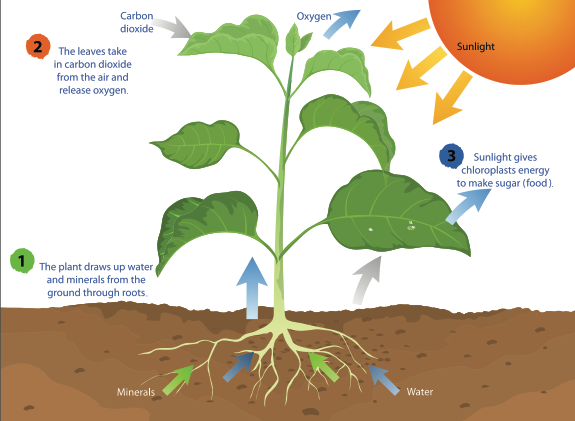
Photosynthesis is a complex process that allows plants, algae, and certain bacteria to convert light energy into chemical energy in the form of glucose. The process occurs primarily in the chloroplasts of plant cells, which contain pigments like chlorophyll that capture light energy. The overall process can be divided into two main stages: light-dependent reactions and light-independent reactions (Calvin Cycle).
1. Light-Dependent Reactions (Photochemical Reactions)
These reactions occur in the thylakoid membranes and require sunlight.
During this stage:
- Chlorophyll absorbs sunlight and energizes electrons.
- Water molecules split into oxygen, protons, and electrons.
- Electrons move through the electron transport chain, producing ATP and NADPH, which carry energy for the next stage
2. Light-Independent Reactions (Calvin Cycle / Dark Reactions)
These reactions take place in the stroma and do not require light directly.
Here:
- ATP and NADPH from light reactions are used to convert carbon dioxide (CO₂) into organic compounds.
- This is called carbon fixation, where CO₂ is transformed into glucose and other carbohydrates.
C3 and C4 Photosynthesis:
C3 and C4 photosynthesis are two different pathways, primarily distinguished by how they first fix carbon and by their adaptations to various environmental conditions.
- C3 Photosynthesis:
Process: CO₂ enters the leaf and is directly fixed into a 3-carbon compound (3-PGA) through the Calvin cycle with the help of Rubisco.
Efficiency: It is the most common pathway, but it becomes inefficient in hot and dry climates because photorespiration increases when Rubisco binds oxygen instead of CO₂.
Examples: Wheat, rice, soybeans, and most temperate plants.
- C4 Photosynthesis:
Process: Occurs in two steps:
Step 1: In mesophyll cells, PEP carboxylase fixes CO₂ into a 4-carbon compound (oxaloacetate).
Step 2: This compound moves to bundle sheath cells, releasing concentrated CO₂ for the Calvin cycle.
Efficiency: Highly efficient in hot, sunny environments due to reduced photorespiration.
Examples: Corn, sugarcane, sorghum.
Evolution of the process:
Although life on Earth today depends heavily on photosynthesis, green plants were not the first organisms to perform this process. Early Earth had a very different environment, and the journey from simple molecules to complex photosynthetic organisms took billions of years. Below is the step-by-step evolution of how photosynthesis likely developed:
Photosynthesis did not begin with green plants. It evolved over billions of years:
- Formation of Complex Organic Molecules: Early Earth conditions formed the basic building blocks of life.
- Origin of Primitive Cells: Molecules organized into early living cells that later developed pigments.
- Development of Pigments: Porphyrins evolved into chlorophylls and bacteriochlorophylls.
- Primitive Light Absorption: Early cells could absorb light for simple reactions.
Energy Storage Mechanisms: Organisms learned to store light energy as chemical energy. - Emergence of True Photosynthesis: Organisms eventually developed the ability to convert CO₂ and water into oxygen and carbohydrates, the foundation of modern photosynthesis.
The Equation:
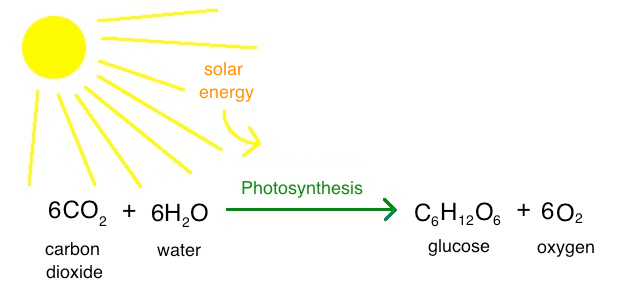
The photosynthesis equation contains two main elements as input:
- Carbondioxide
- Water
The mid-level process includes the following elements:
- Energy from Sunlight
- Chlorophyll from leaves
The output of the process of photosynthesis is:
- Glucose
- Oxygen
The photosynthesis process, when displayed in an equation form, looks like:
Carbondioxide + Water → Glucose + Oxygen
By taking in water (H2O) through the roots, carbon dioxide (CO2) from the air, and light energy from the Sun, plants can perform photosynthesis to make glucose (sugars) and oxygen (O2).
Why is photosynthesis important?
Photosynthesis is a process so vital that life on Earth could not exist without it. It has shaped the planet’s atmosphere, fueled the evolution of complex organisms, and continues to support nearly every ecosystem today. Without this life-sustaining process, Earth would lose its oxygen, biodiversity would collapse, and only a handful of chemosynthetic organisms could survive. Photosynthesis is important because:
- Creation of Oxygen-Rich Atmosphere:
Photosynthetic cyanobacteria initiated the Great Oxidation Event around 2.4 billion years ago, gradually increasing atmospheric oxygen and enabling the evolution of multicellular life. - Foundation of All Food Webs:
Autotrophs, organisms that perform photosynthesis, serve as the primary producers in almost every ecosystem. They convert sunlight into food, supporting herbivores, carnivores, and decomposers. - Essential for Survival on Earth:
Without photosynthesis, food production would halt, oxygen levels would drop dramatically, and most living organisms would not survive. Only chemosynthetic bacteria could persist in such an environment. - Source of Fossil Fuels:
The energy captured by ancient plants and microorganisms through photosynthesis eventually became fossil fuels like coal, oil, and natural gas through geological processes. - Supports Modern Industries:
Fossil fuels, derived from past photosynthetic activity, now power factories, transportation, homes, and serve as raw materials for plastics and various synthetic products. - Regulates Atmospheric Carbon Dioxide:
Photosynthesis helps remove carbon dioxide from the atmosphere. However, rapid use of fossil fuels is returning CO₂ at record speeds, contributing to global warming and climate change. - Maintains Environmental Balance
By producing oxygen and absorbing carbon dioxide, photosynthesis plays a crucial role in regulating Earth’s climate and sustaining ecological stability.
Differentiate between photosynthesis and respiration:
Many O-level past papers include this question to differentiate between photosynthesis and respiration. It is an important concept in O-level biology. The major differences between photosynthesis and respiration are:
- Photosynthesis converts light energy into chemical energy by using carbon dioxide, water, and sunlight to create glucose and oxygen
- Respiration breaks down glucose and oxygen to release usable energy (ATP), carbon dioxide, and water
- Photosynthesis is an anabolic (energy-storing) process that occurs in chloroplasts during the day
- Respiration is a catabolic (energy-releasing) process that happens in mitochondria in all living organisms, both day and night.
The table below will describe the differences clearly:
| Feature | Photosynthesis | Respiration |
| Purpose | To create food (glucose) and store energy | To release energy from food (glucose) for cellular activities |
| Energy | Converts light energy into chemical energy (stores energy) | Converts chemical energy into usable energy (releases energy) |
| Organisms | Plants, algae, and some bacteria | All living organisms (plants, animals, bacteria) |
| Location | Chloroplasts | Mitochondria and cytoplasm |
| Reactants | Carbon dioxide, water, and light energy | Glucose and oxygen |
| Products | Glucose and oxygen | Carbon dioxide, water, and ATP (energy) |
| Process Type | Anabolic (builds molecules) | Catabolic (breaks down molecules) |
| Light Dependency | Requires light | Does not require light (occurs continuously) |
| Overall Equation | 6CO2 + 6H2O + Light → C6H12O6+6O2 | C6H12O6 + 6O → 6CO2+ 6H2O+ ATP |
The Products:
The following are the products of Photosynthesis:
- Carbohydrates: Carbohydrates are the main organic compounds produced directly through photosynthesis in most green plants.
- Starch: Plants produce very little free glucose. Instead, the glucose they make is usually combined to form starch, or it joins with another sugar, fructose, to form sucrose.
- Amino Acids, Protein, and Fats: Photosynthesis also helps produce amino acids, proteins, fats (lipids), pigments, and many other organic substances found in green plant tissues. Minerals provide essential elements like nitrogen (N), phosphorus (P), and sulfur (S), which plants use to build these compounds.
- Oxygen and other organic molecules: New bonds then form to produce oxygen gas (O₂) and various organic molecules.
Factors that affect the rate of Photosynthesis:
The rate of photosynthesis is usually measured by how much oxygen a plant produces. Several environmental and internal factors influence how fast photosynthesis happens. These include light, carbon dioxide, temperature, water, minerals, and the plant’s own condition (species, health, and growth stage):
1. Light Intensity & Temperature
Photosynthesis has two stages, light reactions and dark (enzyme-controlled) reactions.
- At low or medium light levels, photosynthesis increases as light increases.
- At high light levels, the rate reaches a point where it cannot increase further (light saturation).
- Temperature has little effect at low light, but at high light intensity, temperature can limit the rate.
- High temperatures increase photorespiration, a wasteful process that reduces photosynthesis, especially when water is limited.
2. Carbon Dioxide Concentration
CO₂ is a raw material for photosynthesis, so its amount directly affects the rate.
- Higher CO₂ levels increase photosynthesis up to a certain limit.
- Atmospheric CO₂ has risen from 0.028% (1860) to 0.042% (2024).
- Increased CO₂ boosts photosynthesis but also contributes to climate change, which affects plant growth.
3. Water Availability (Concise Explanation)
Water is needed for photosynthesis and for cooling the plant through transpiration.
- When water is low, stomata close to prevent water loss.
- Closed stomata reduce CO₂ entry, slowing photosynthesis.
- Reduced transpiration increases leaf temperature and increases photorespiration.
4. Mineral Availability
Plants need minerals for chlorophyll, enzymes, proteins, DNA, and cell structures.
- Key minerals: nitrogen, phosphorus, sulfur, magnesium, iron, potassium, calcium.
- Trace minerals: manganese, copper, and chloride.
- Deficiency in any essential mineral slows photosynthesis.
5. Internal Plant Factors
Each plant species has its own optimal conditions.
- The plant’s enzymes adjust depending on needs.
- Increased CO₂ may cause a short-term boost, but if the plant cannot use the extra sugars, photosynthesis slows again.
- Plants with more energy-demanding organs (e.g., fruits, roots) can use more sugar and therefore keep photosynthesizing more.
Energy efficiency:
The energy efficiency of photosynthesis is the measure of how much sunlight energy absorbed by plants is stored as chemical energy in products like glucose and oxygen. It is calculated as the ratio of energy stored to energy absorbed. The amount of energy stored varies depending on the plant species and environmental conditions.
In practice, the actual efficiency of photosynthesis is much lower. In crops, only around 1% of sunlight is stored in biomass, though some high-yield crops like sugarcane may reach 3–3.5%.
Efficiency is limited because:
- Plants absorb only some wavelengths.
- Energy is used in respiration and growth.
- Photorespiration wastes energy.
- Many sugars cannot be used immediately, slowing photosynthesis.
- Only certain plant parts are harvested.
Is photosynthesis endothermic or exothermic?
Before getting to know whether photosynthesis is an exothermic or endothermic reaction, we should actually understand what exothermic and endothermic reactions are.
Exothermic: These are reactions that release energy, usually in the form of heat or light.
Endothermic: These are reactions that absorb energy from the surroundings.
Photosynthesis is an endothermic reaction because sunlight energy is absorbed during the process. Here, plants use the energy from the sun to convert carbon dioxide and water into glucose and oxygen.
Conclusion:
Unlike humans, plants have to carry out a process in order to produce food. It is a vital process that supports life by producing oxygen and energy-rich compounds. Understanding its stages and pathways helps students grasp how plants adapt, grow, and maintain ecosystems. Learning this topic strengthens core biological knowledge and builds a solid foundation for further studies in science.
At VACE Global, we provide comprehensive O Level preparation online, helping students grasp complex topics like photosynthesis with ease. Our expert faculty offer personalized guidance, interactive lessons, and a structured approach to ensure academic success. We also provide opportunities through merit-based scholarships for high-achieving students, making quality education accessible.
Enroll now at VACE Global and start your journey toward academic excellence with top-tier support in all O-level subjects.
FAQs:
1. What is the main purpose of photosynthesis?
The main purpose of is to convert light energy into chemical energy, producing glucose for the plant and releasing oxygen into the atmosphere.
2. What is the difference between light-dependent and light-independent reactions?
Light-dependent reactions use sunlight to produce ATP and NADPH, while light-independent reactions (Calvin Cycle) use these energy molecules to form glucose.
3. Why is studying photosynthesis important for O Level Biology?
It is a core topic in O Level Biology and helps students understand plant physiology, energy flow in ecosystems, and key differences in plant adaptations like C3 and C4 pathways.