
The first pillar of īmān (faith) in Islam is to believe in Allah. As Muslims, we are required to believe in Allah as He has described Himself through the beautiful 99 names of Allah and perfect Attributes found in the Noble Qur’an and authentic Sunnah. Allah repeats His Names throughout the Qur’an so that we may know Him, recognize His greatness, and draw closer to Him through worship and supplication.
Learning and contemplating the 99 Names of Allah (Al-Asmā al-Ḥusnā, The Most Beautiful Names) is one of the most noble and beloved acts of worship. There is nothing more sacred or elevating than truly knowing our Creator and living according to the guidance His Names offer.
Allah says in the Quran:
“Allah has the Most Beautiful Names. So call upon Him by them, and keep away from those who abuse His Names. They will be punished for what they used to do.” (Quran 7:180)
“Allah – there is no god ˹worthy of worship˺ except Him. He has the Most Beautiful Names.” (Quran 20:8)
“He is Allah: the Creator, the Inventor, the Shaper. He ˹alone˺ has the Most Beautiful Names. Whatever is in the heavens and the earth ˹constantly˺ glorifies Him. And He is the Almighty, All-Wise.” (Quran 59:24)
In this blog, you will learn the significance of the 99 names of Allah, the complete list of names, and the benefits of reciting them, in everyday life as O-level and A-level students.
You can learn about the 99 Names of Muhammad through VACE Global.
Significance of the 99 Names of Allah:
The significance of the 99 names of Allah lies in offering a way to know, worship, and invoke Allah, which is believed to lead to inner peace, spiritual growth, and a righteous life, with a key belief being that memorizing them leads to Paradise.
- Understanding and knowledge: The names provide insight into Allah’s divine nature, including His power, mercy, wisdom, and justice. By knowing these names, Muslims can better understand the magnificence and perfection of Allah.
- Deeper connection to Allah: Regular recitation, remembrance, and contemplation of the names help to foster a closer relationship with Allah and bring a sense of tranquility and inner peace.
- Guidance for life: The names guide how to live a life according to Islamic teachings and serve as a constant reminder that Allah is always near.
- Spiritual and material benefits: Muslims believe that invoking Allah by His names can lead to spiritual and even material benefits, such as answered prayers, forgiveness, protection, and sustenance.
- Path to Paradise: A core belief, supported by hadith, is that memorizing and knowing all 99 names is a way to enter Paradise.
- Worship and prayer: The Quran encourages Muslims to call upon Allah using these names during their prayers, which is seen as a way to make supplications more powerful.
The 99 names of Allah: Complete list with meaning
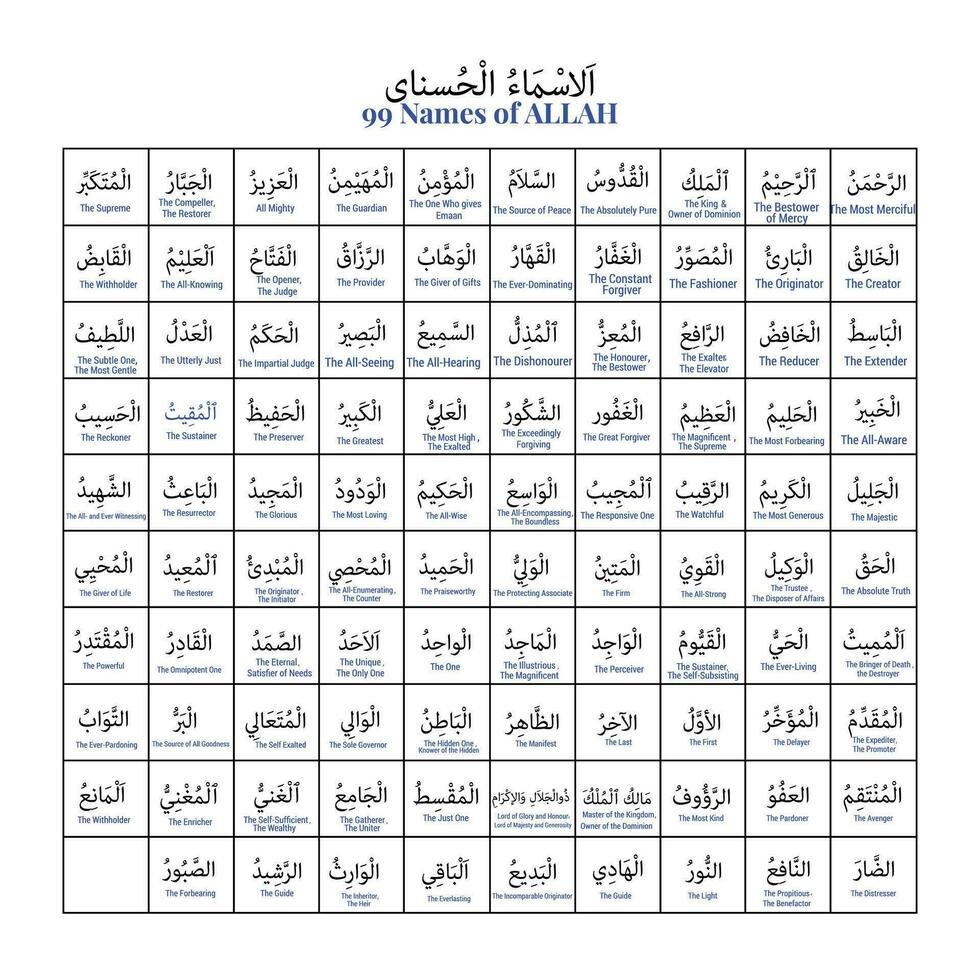
| # | Arabic Name | Transliteration | Meaning (English) |
| 1 | الله | Allah | The Greatest Name |
| 2 | الرَّحْمَن | Ar-Rahman | The Most Merciful |
| 3 | الرَّحِيم | Ar-Rahim | The Most Compassionate |
| 4 | الْمَلِك | Al-Malik | The King and Owner of Dominion |
| 5 | الْقُدُّوس | Al-Quddus | The Absolutely Pure |
| 6 | السَّلَام | As-Salam | The Source of Peace |
| 7 | المُؤْمِن | Al-Mu’min | The Granter of Security |
| 8 | المُهَيْمِن | Al-Muhaymin | The Protector |
| 9 | الْعَزِيز | Al-Aziz | The Almighty |
| 10 | الْجَبَّار | Al-Jabbar | The Compeller |
| 11 | الْمُتَكَبِّر | Al-Mutakabbir | The Supreme in Greatness |
| 12 | الْخَالِق | Al-Khaliq | The Creator |
| 13 | الْبَارِئ | Al-Bari’ | The Evolver |
| 14 | الْمُصَوِّر | Al-Musawwir | The Fashioner |
| 15 | الْغَفَّار | Al-Ghaffar | The Ever-Forgiving |
| 16 | القَهَّار | Al-Qahhar | The Dominant |
| 17 | الوَهَّاب | Al-Wahhab | The Giver of All |
| 18 | الرَّزَّاق | Ar-Razzaq | The Provider |
| 19 | الفَتَّاح | Al-Fattah | The Opener |
| 20 | العَلِيم | Al-‘Alim | The All-Knowing |
| 21 | القَابِض | Al-Qabid | The Withholder |
| 22 | البَاسِط | Al-Basit | The Expander |
| 23 | الخَافِض | Al-Khafid | The Reducer |
| 24 | الرَّافِع | Ar-Rafi‘ | The Exalter |
| 25 | المُعِز | Al-Mu‘izz | The Bestower of Honor |
| 26 | المُذِل | Al-Mudhill | The Humiliator |
| 27 | السَّمِيع | As-Sami‘ | The All-Hearing |
| 28 | البَصِير | Al-Basir | The All-Seeing |
| 29 | الحَكَم | Al-Hakam | The Judge |
| 30 | العَدْل | Al-‘Adl | The Utterly Just |
| 31 | اللَّطِيف | Al-Latif | The Most Subtle |
| 32 | الخَبِير | Al-Khabir | The All-Aware |
| 33 | الحَلِيم | Al-Halim | The Most Forbearing |
| 34 | العَظِيم | Al-Azim | The Magnificent |
| 35 | الغَفُور | Al-Ghafur | The Most Forgiving |
| 36 | الشَّكُور | Ash-Shakur | The Most Appreciative |
| 37 | العَلِيّ | Al-‘Aliyy | The Most High |
| 38 | الكَبِير | Al-Kabir | The All-Great |
| 39 | الحَافِظ | Al-Hafiz | The Preserver |
| 40 | المُقِيت | Al-Muqit | The Maintainer |
| 41 | الحَسِيب | Al-Hasib | The Reckoner |
| 42 | الجَلِيل | Al-Jalil | The Majestic |
| 43 | الكَرِيم | Al-Karim | The Most Generous |
| 44 | الرَّقِيب | Ar-Raqib | The Watchful |
| 45 | المُجِيب | Al-Mujib | The Answerer |
| 46 | الوَاسِع | Al-Wasi‘ | The All-Encompassing |
| 47 | الحَكِيم | Al-Hakim | The All-Wise |
| 48 | الوَدُود | Al-Wadud | The Most Loving |
| 49 | المَجِيد | Al-Majid | The Glorious |
| 50 | البَاعِث | Al-Ba‘ith | The Resurrector |
| 51 | الشَّهِيد | Ash-Shahid | The Witness |
| 52 | الحَق | Al-Haqq | The Absolute Truth |
| 53 | الوَكِيل | Al-Wakil | The Trustee |
| 54 | القَوِي | Al-Qawwiyy | The All-Strong |
| 55 | المَتِين | Al-Matin | The Firm |
| 56 | الوَلِي | Al-Waliyy | The Protecting Guardian |
| 57 | الحَمِيد | Al-Hamid | The Praiseworthy |
| 58 | المُحْصِي | Al-Muhsi | The Accounter |
| 59 | المُبْدِئ | Al-Mubdi‘ | The Originator |
| 60 | المُعِيد | Al-Mu‘id | The Restorer |
| 61 | المُحْيِي | Al-Muhyi | The Giver of Life |
| 62 | المُـمِيت | Al-Mumit | The Giver of Death |
| 63 | الحَي | Al-Hayy | The Ever-Living |
| 64 | القَيُّوم | Al-Qayyum | The Self-Sustaining |
| 65 | الوَاجِد | Al-Wajid | The Perceiver |
| 66 | المَاجِد | Al-Majid | The Noble |
| 67 | الوَاحِد | Al-Wahid | The One |
| 68 | الصَّمَد | As-Samad | The Self-Sufficient |
| 69 | القَادِر | Al-Qadir | The All-Powerful |
| 70 | المُقْتَدِر | Al-Muqtadir | The Creator of All Power |
| 71 | المُقَدِّم | Al-Muqaddim | The Promoter |
| 72 | المُؤَخِّر | Al-Mu’akhkhir | The Delayer |
| 73 | الأوَّل | Al-Awwal | The First |
| 74 | الآخِر | Al-Akhir | The Last |
| 75 | الظَّاهِر | Az-Zahir | The Manifest |
| 76 | البَاطِن | Al-Batin | The Hidden |
| 77 | الوَالِي | Al-Wali | The Sole Planner |
| 78 | المُتَعَالِي | Al-Muta‘ali | The Most Exalted |
| 79 | البَرّ | Al-Barr | The Source of Goodness |
| 80 | التَّوَّاب | At-Tawwab | The Accepter of Repentance |
| 81 | المُنْتَقِم | Al-Muntaqim | The Avenger |
| 82 | العَفُوّ | Al-‘Afuww | The Pardoner |
| 83 | الرَّؤُوف | Ar-Ra’uf | The Most Kind |
| 84 | مَالِكُ المُلْك | Malik-ul-Mulk | Owner of Sovereignty |
| 85 | ذُو الجَلالِ وَالإكْرَام | Dhul-Jalali wal-Ikram | Lord of Glory and Honor |
| 86 | المُقْسِط | Al-Muqsit | The Equitable One |
| 87 | الجَامِع | Al-Jami‘ | The Gatherer |
| 88 | الغَنِي | Al-Ghaniyy | The Self-Sufficient |
| 89 | المُغْنِي | Al-Mughni | The Enricher |
| 90 | المَانِع | Al-Mani‘ | The Preventer of Harm |
| 91 | الضَّار | Ad-Darr | The Creator of Harm |
| 92 | النَّافِع | An-Nafi‘ | The Bestower of Benefit |
| 93 | النُّور | An-Nur | The Light |
| 94 | الهَادِي | Al-Hadi | The Guide |
| 95 | البَدِيع | Al-Badi‘ | The Incomparable |
| 96 | البَاقِي | Al-Baqi | The Everlasting |
| 97 | الوَارِث | Al-Warith | The Inheritor |
| 98 | الرَّشِيد | Ar-Rashid | The Righteous Teacher |
| 99 | الصَّبُور | As-Sabur | The Most Patient |
Deep Explanation of the Names (Grouped by Theme)
Understanding the Attributes of Allah is essential for every Muslim who wants to strengthen their īmān and connection with their Creator. Grouping the Names of Allah by theme allows learners, especially those studying Islam formally, such as in O-level Islamiyat or following the Cambridge syllabus, to understand how each Name shapes a believer’s worldview. These thematic categories deepen, clarify, and make reflection more meaningful.
Names of Mercy & Compassion:
- Ar-Rahman (The Entirely Merciful),
- Ar-Raheem (The Especially Merciful),
- Al-Ghaffar (The Oft-Forgiving),
- Al-Afuww (The Pardoner)
These Names remind us that Allah’s mercy encompasses everything. His compassion is limitless, and He repeatedly offers forgiveness to those who return to Him. When believers recognize Allah’s mercy, they worship with hope, seek forgiveness sincerely, and learn to show kindness to others. This category teaches Muslims that no matter their mistakes, Allah’s mercy is always greater.
Names of Power & Might
- Al-Aziz (The Almighty),
- Al-Jabbar (The Compeller),
- Al-Qahhar (The Subduer)
These Names highlight Allah’s absolute power and authority over all creation. Nothing happens outside His control, and no force can overpower His decree. Understanding these Attributes instills awe, humility, and trust in Allah’s plan. For Muslims, this category serves as a reminder to rely on Allah’s strength during difficulties and recognize His supremacy.
Names of Creation & Sustenance
- Al-Khaliq (The Creator),
- Al-Bari’ (The Evolver),
- Ar-Razzaq (The Provider)
These Names emphasize that Allah alone creates, shapes, and provides for every living being. Whether it is physical sustenance, emotional support, or spiritual fulfillment, all rizq comes from Him. Reflecting on these Names nurtures gratitude, removes greed, and strengthens tawakkul (trust). This group helps Muslims understand that their livelihood is already written by the One who created them.
Names of Knowledge & Wisdom:
- Al-Aleem (The All-Knowing),
- Al-Hakeem (The All-Wise),
- Al-Khabir (The All-Aware)
These Attributes show that Allah’s knowledge is complete and perfect—nothing is hidden from Him, whether on earth or in the depths of the heart. His decisions are always wise, even when humans cannot immediately understand them. Believers who internalize these Names deepen their trust in Allah’s wisdom and learn to view trials as purposeful rather than random.
Names of Protection & Security:
- Al-Muhaymin (The Guardian),
- As-Salam (The Source of Peace),
- Al-Hafeez (The Protector)
These Names reflect Allah’s role as the One who safeguards His creation. He grants peace, protects His servants from harm, and watches over them at every moment. Recognizing these Names brings a sense of safety and comfort to the believer, especially during times of fear or uncertainty. This category teaches Muslims that true peace and protection can only come from Allah.
Names of Love, Kindness & Generosity
- Al-Wadud (The Most Loving),
- Al-Kareem (The Most Generous),
- Al-Lateef (The Subtle and Kind)
These Names emphasize Allah’s deep love for His servants, His endless generosity, and His gentle care even in matters they do not perceive. Reflecting on these Attributes strengthens one’s emotional connection with Allah and inspires believers to embody love, generosity, and kindness in their daily interactions. This category reminds Muslims that their Creator is not only powerful, but also intimately loving and compassionate.
Benefits of Reciting and Memorizing the Names of Allah:
Reciting and memorizing the 99 Names of Allah is a deeply spiritual practice that strengthens a Muslim’s relationship with their Creator. Each name reflects a divine attribute, mercy, wisdom, protection, and forgiveness that brings comfort, clarity, and purpose into daily life. For students and adults alike, understanding these names can transform stress into calmness, fear into trust, and confusion into guidance. This is especially helpful during academic challenges, such as IGCSE exams or managing the common mistakes students make in exams.
Key Benefits:
- Strengthens Faith and Tawakkul (Trust in Allah)
Knowing names like Al-Muhaymin (The Protector) and Al-Wakeel (The Disposer of Affairs) helps believers rely on Allah during difficulties, including exam stress or personal struggles. - Reduces Anxiety and Mental Stress
Reciting names such as Ar-Rahman and As-Salam brings peace to the heart, helping students stay calm, especially when preparing through A-level past papers or timed tests. - Improves Focus and Clarity of Mind
Understanding Allah as Al-Hakeem (The All-Wise) and Al-Aleem (The All-Knowing) encourages a clearer mindset, lowering confusion and helping avoid common exam mistakes. - Encourages Patience and Discipline
Names like As-Saboor (The Patient) inspire consistency, perfect for long-term preparation and steady progress in school, work, and spiritual life. - Boosts Motivation and Hope
Remembering Al-Fattah (The Opener of Doors) instills optimism during difficult times—whether struggling with revision, personal challenges, or academic pressure. - Strengthens Duas and Connection During Prayer
Calling upon Allah using His names is a Sunnah that brings barakah, strengthens dua acceptance, and increases mindfulness in worship. - Purifies the Heart and Improves Character
Learning the meanings of the names is not just recitation; it helps believers adopt qualities like kindness, forgiveness, generosity, and humility. - Provides a Sense of Protection and Comfort
Names such as Al-Hafeez (The Protector) and As-Salam (The Source of Peace) bring a deep feeling of safety and emotional security.
How to Memorize the 99 Names of Allah Easily:
Memorizing the 99 Names does not need to be overwhelming. With simple and consistent steps, anyone, even children, can learn them with ease.
- Divide the Names into Small Groups
Learn 4–5 names at a time based on themes such as mercy, power, or wisdom to make memorization easier and more meaningful. - Use Repetition and Daily Recitation
Recite the names for a few minutes every day after prayers. Consistency strengthens long-term memory. - Write the Names Down
Writing boosts retention. Students often use this technique while preparing for exams or revising subjects like A-level past papers. - Connect Each Name to Its Meaning
Understanding the meaning makes the name memorable. For example, when you say Ar-Razzaq, think of Allah as the One who provides everything you have. - Listen to Audio Recitations
Listening during chores, driving, or before sleeping helps reinforce memorization effortlessly. - Teach Someone Else
Teaching strengthens your own learning, a method often recommended by platforms like VACE Global, which encourages students to revise by explaining concepts to peers.
Conclusion:
Learning, reciting, and memorizing the 99 Names of Allah is a journey that strengthens faith, heals the heart, and deepens your understanding of your Creator. Each name opens the door to a deeper connection with Allah, offering peace, guidance, hope, and spiritual growth. Whether you’re a student navigating studies or an adult facing life’s challenges, knowing these names brings clarity and tranquility to everyday life.
If you are a student preparing for Islamiyat or other subjects, VACE Global provides structured learning, expert guidance, and downloadable resources that can support your Islamic studies and academic preparation. To get prepared for the upcoming Digital exams by Cambridge, Enroll today and start your journey!
FAQs:
1. How many Names of Allah are mentioned in the Qur’an?
The Qur’an contains many of Allah’s names, though the complete list of 99 comes from authentic hadith. These names reflect His mercy, power, knowledge, and perfection.
2. Is it necessary to memorize all 99 Names of Allah?
Memorization is highly rewarding, but understanding and applying the meanings is even more important. Reciting them with reflection brings immense spiritual benefit.
3. Can children memorize the Names of Allah?
Yes! Children learn quickly when names are taught with stories, visuals, and short groups. Many parents and teachers, including those at VACE Global, use activity-based learning to help kids memorize effectively.
4. Are the Names of Allah part of the O-Level Islamiyat syllabus?
Yes. The concept of Allah’s Names and Attributes is included within the O-Level Islamiyat curriculum under belief in Allah, making it important for students to understand both definitions and applications.
5. What is the best method to memorize the Names of Allah?
A combination of repetition, audio recitation, writing, and learning meanings. Breaking them into categories like mercy, power, and protection makes memorization faster and easier.
Enroll with the best online O/A-level tutors and get your academic journey on track!